
Last updated November 15, 2026
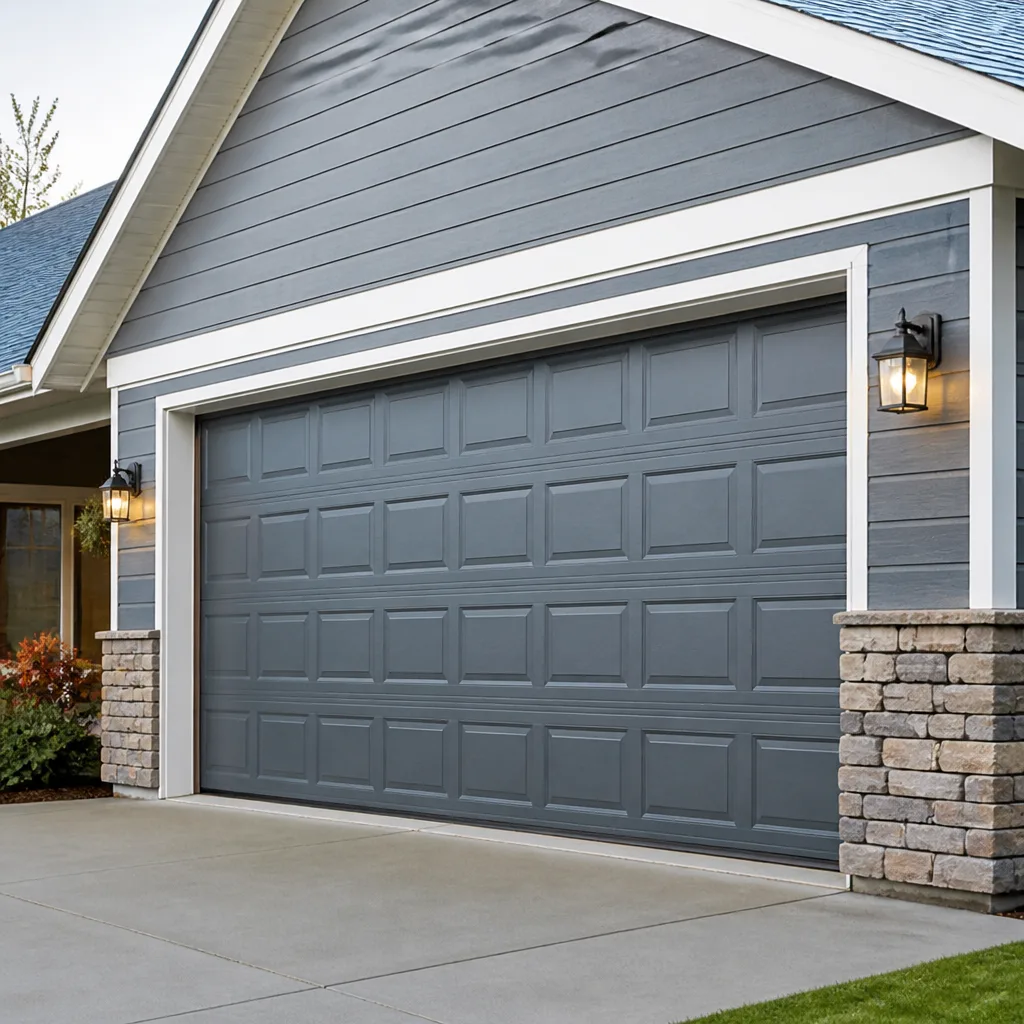 Raised-panel steel
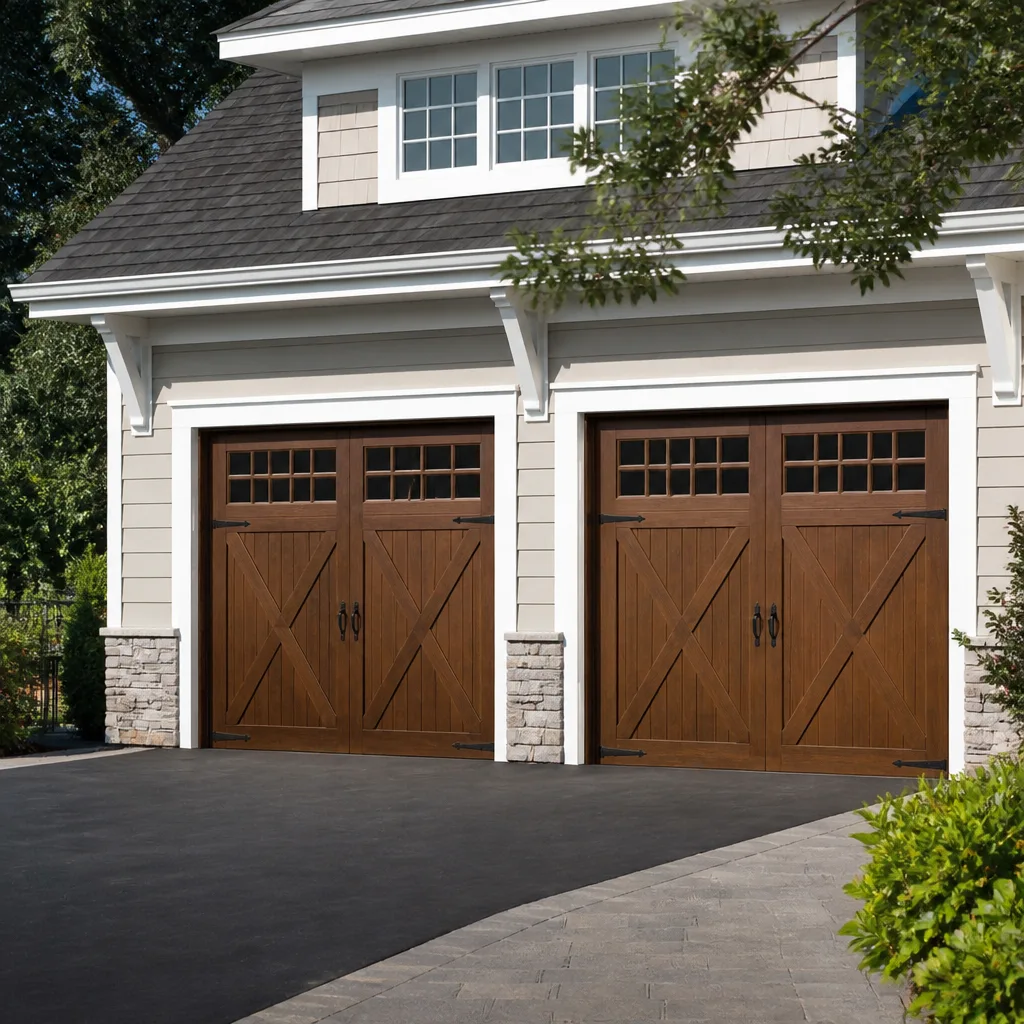 Carriage house
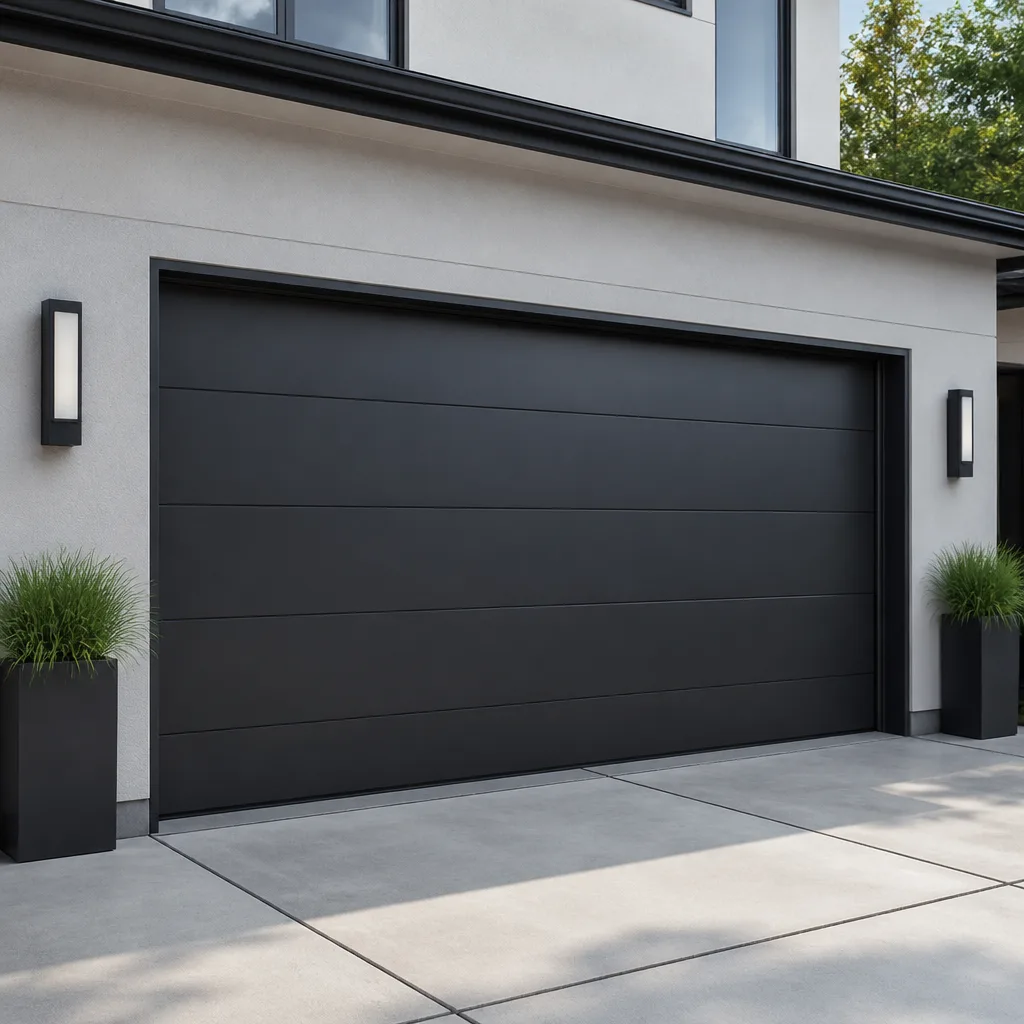 Modern flush
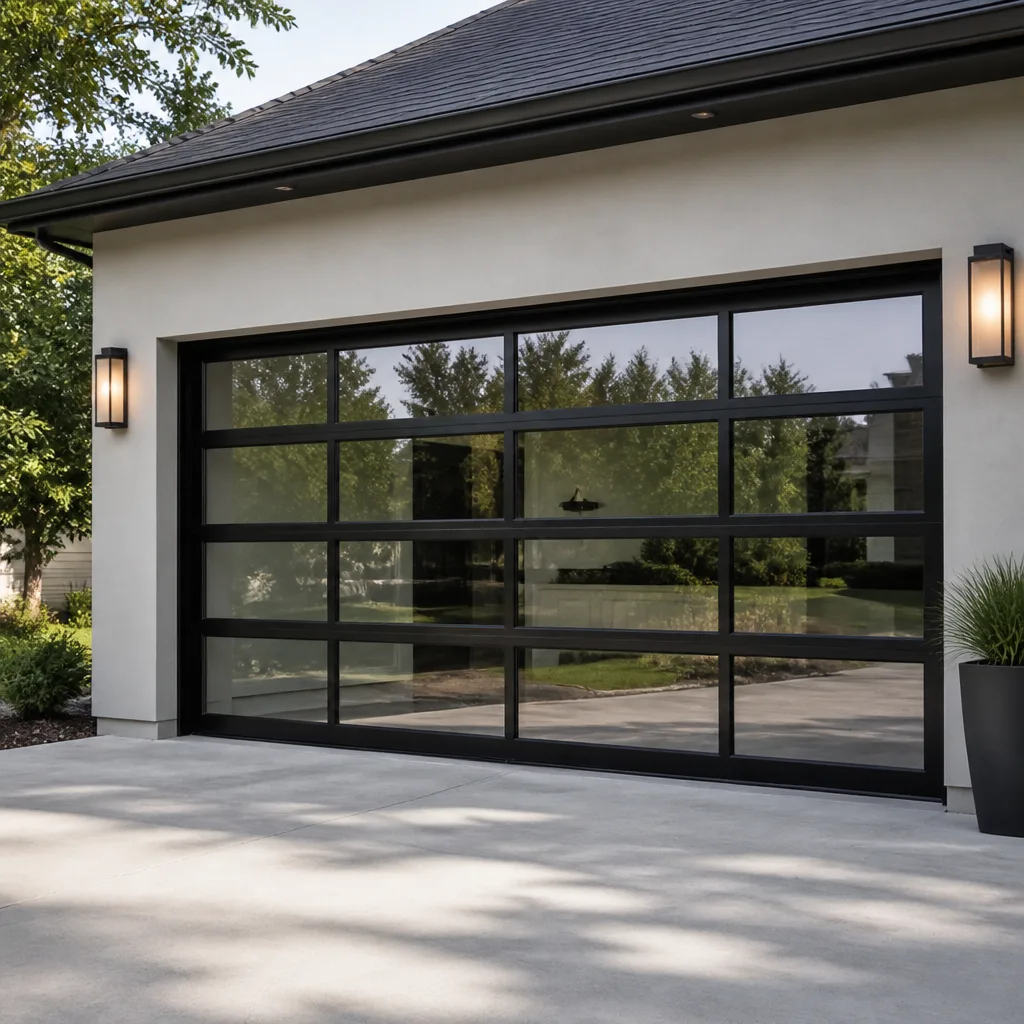 Full-view glass
 LiftMaster openers
 Chamberlain openers
Full 25-point door and opener safety check with every visit - springs, cables, rollers, tracks, and your LiftMaster or Chamberlain opener included
You get a price before we start. It does not change when the pro arrives.
Get your free estimateGarage Door Emergency Preparedness Guide for Broken Arrow Homes
Most Broken Arrow homeowners think about their garage door exactly once: when it stops working. That’s backwards. The time to understand your emergency release, your opener’s battery backup, and what a hail-dented door panel actually means is before the tornado warning, the ice storm, or the power outage, not in the middle of it. When the power goes out across northeast Oklahoma, the homes that recover fastest aren’t the ones with the newest openers. They’re the ones whose owners already know how their system behaves under stress.
This guide walks through the full emergency protocol for a Broken Arrow garage door: how the release cord works on the most common openers, which models carry backup batteries, how to secure a door from the inside during a tornado warning, and what to photograph after a storm for an insurance claim. It’s written for people who live here, where the weather doesn’t ask permission.
Quick Answer
A garage door emergency in Broken Arrow usually comes down to three things: knowing how to manually disengage your opener, having a plan for power outages, and knowing when a storm-damaged door is unsafe to operate. Every automatic opener has a manual release cord that lets you lift the door by hand when the power is out or the motor fails. Test it while the power is on. If your door won’t move, the door is visibly bent or off-track after a storm, or you hear a snap from the torsion springs, stop and call a professional rather than forcing it.
Styles & brands we work with
- Raised-panel steel
- Carriage house
- Modern flush
- Full-view glass
- LiftMaster openers
- Chamberlain openers
Table of Contents
- How the Emergency Release Cord Works on LiftMaster, Chamberlain, and Genie Openers
- What to Do When the Door Fails Mid-Travel
- Battery Backup Openers for Broken Arrow Power Outages
- Post-Tornado and Post-Hail Inspection Protocol
- How to Secure a Garage Door From the Inside During a Tornado Warning
- What to Document After Storm Damage for Insurance
- How Garage Door Repair Works After a Broken Arrow Storm
- Pre-Season Maintenance That Prevents Emergencies
How the Emergency Release Cord Works on LiftMaster, Chamberlain, and Genie Openers
The emergency release cord is the single most important piece of safety equipment on your garage door, and it’s the one most homeowners have never touched. The cord hangs from the trolley that runs along the opener rail, usually with a red handle. Pulling it disengages the door from the motor so you can raise and lower it by hand. That’s the whole idea. But the details differ slightly by brand, and the position of the door when you pull matters more than people realize.
On LiftMaster and Chamberlain openers (they share a manufacturing lineage, so the mechanics are nearly identical), the release cord hangs from the trolley carriage. Pulling it straight down and toward the door is the safe motion. On Genie openers, the release mechanism sits in a similar spot but the trolley design is a bit different; the cord still disengages the carriage, and the same rule applies: pull with the door fully closed whenever possible.
Why door position matters
If the door is fully closed and you pull the release, the door stays put. It’s balanced on its springs and the tracks hold it. You can then lift it by hand, and the spring tension does most of the work on a healthy door. If the door is fully open, the same logic applies in reverse.
The dangerous position is mid-travel. If the door is partly open when you pull the cord, the door becomes an unpowered weight on a spring system that wasn’t designed to be released under load. On a door with a broken or weakening spring, that weight can drop fast. We’ve seen the aftermath of exactly this in Broken Arrow homes after power outages. The override works. The problem is people panic and pull it at the wrong moment.
The safe sequence
- Stop and look at where the door is. Note whether it’s fully closed, fully open, or partway.
- If the door is partway open, don’t pull the cord yet. Let the door settle and see if you can move it slowly by hand first, testing the weight before you fully disengage.
- Pull the release cord down and toward the door in one firm motion.
- Lift the door slowly by hand using the bottom edge, keeping your fingers clear of the panel seams.
- Prop or secure the door in the open position if you need to move a car out, and never leave it balanced mid-travel while you work underneath.
One more thing: re-engaging the door after a manual open isn’t automatic. You usually need to pull the cord again or cycle the opener to reconnect the trolley. Check that the door is properly reconnected before you rely on the motor again.
What to Do When the Door Fails Mid-Travel
A door that stops partway up or partway down is one of the most common emergency calls we get in Broken Arrow, and it’s also the situation where homeowners do the most damage trying to fix it themselves. The door is stuck because something in the system has failed: a torsion spring, a cable, a roller off its track, or the opener’s travel limit setting. Which one it is changes what you should do next, and the answer is sometimes “leave it alone.”
Here’s how to think through it. If the door is stuck partway and the opener is still trying to run, the motor is fighting a mechanical problem. Cut power to the opener at the wall switch or breaker. Then look and listen.
- You hear a snap and a loud bang, and the door drops or sags: a torsion spring has failed. Springs are under extreme tension. Do not attempt to lift, adjust, or repair anything on the spring system yourself. Keep everyone away from the door and call a technician.
- A cable is visibly off its drum or hanging loose: stop. Cables are under tension and can cause serious injury if they whip free. This needs a professional.
- The door looks crooked, and one side is higher than the other: a roller or cable has likely come off track. Don’t run the opener. It will make the track damage worse.
- The door runs but reverses immediately or stops short: this is often a limit switch or safety sensor issue, which is a much lower-risk problem. It still needs a technician to reset properly, but the door itself isn’t dangerous.
Once the door is stuck and you’ve cut power, the manual release is usually your path to getting the car out, but only if the door still feels balanced and moves freely by hand. If it doesn’t, don’t force it. A propped or jammed door is a nuisance. A door that comes down uncontrolled on a car or a person is a real injury. For a same-day diagnosis on a stuck door in Broken Arrow, garage door repair is the service to call.
Battery Backup Openers for Broken Arrow Power Outages
Power outages are a routine part of living in Broken Arrow, and the simplest way to sidestep the whole release-cord scramble is a battery backup opener. These units keep the door working for a limited number of cycles when the grid goes down, which means you can get your car out without ever touching the manual release.
Not every opener has this built in. Here’s how the common brands stack up.
Which openers have native battery backup
- LiftMaster: Several models in the current lineup include integrated battery backup, and the brand has made backup a headline feature across its residential range. If your opener has a battery compartment and a backup battery indicator light, it’s native.
- Chamberlain: Chamberlain and LiftMaster share engineering, and Chamberlain’s backup-equipped models function the same way. Look for the battery backup designation on the unit or in the manual.
- Genie: Genie offers battery backup on select models, but it’s less universal across the line than with LiftMaster. Check your specific model before assuming.
Which openers need an add-on
Many older openers, and several current models from brands like Raynor and others, don’t include backup natively. Some can accept an add-on backup unit; others can’t. If your opener is older and doesn’t have backup, the honest answer is that replacing it may be the cleaner path than trying to retrofit, especially if it’s already due for an upgrade.
How long does backup last?
Battery backup is designed for a limited number of open and close cycles, not for days of normal use. It’s there to get you out of the driveway and back in, then to let you move the car a few more times. Treat it as a bridge, not a substitute for power. Keep the battery fresh; a backup battery that’s never been tested is a backup battery you can’t count on. When the grid stays down for an extended stretch, a manual release is still your fallback, which is why testing that cord matters even if you have backup.
Post-Tornado and Post-Hail Inspection Protocol
After a storm rolls through Broken Arrow, the garage door is one of the most exposed parts of the house. It faces the street, it’s wide, and it takes the wind load and the hail. The tricky part is that a door can look fine and be structurally compromised, or look dented and be totally safe. Knowing the difference is what keeps you from operating a door that shouldn’t move.
Start with the door closed and the opener off
Cut power to the opener first. Then walk the door from the inside and the outside, looking for these specific signs.
- Panels and seams: Check the vertical seams between panels. A dent in the flat face of a steel panel is often cosmetic. A crease or separation along a seam is structural, and it means the panel has lost rigidity.
- Hinges and rollers: Hail and wind can bend hinges and pop rollers out of their tracks. Look along each track for gaps between the roller and the track edge.
- The tracks themselves: Track that’s bent, spread wide, or no longer parallel to the door is a sign the door took a hit it couldn’t absorb. Don’t run the opener on a bent track.
- Springs and cables: Look for a visible gap in a torsion spring, a stretched spring, or a cable that’s slack or frayed. Any of these means the door is not safe to operate.
- The bottom seal and threshold: Wind-driven water can get under the seal. Check for gaps that let water in, because Oklahoma storms find every one.
- Balance test: With the opener disengaged, lift the door halfway and let go. A balanced door stays roughly where you put it. A door that sinks or races up has a spring problem.
The most dangerous outcome is a door that looks cosmetically fine but has a weakened spring or a bent track that lets it drop or come off the rails during the next cycle. If anything on the list above doesn’t look right, don’t operate the door. Call a technician who can inspect the whole system, and reach out to garage door opener repair if the door and springs check out but the opener is acting up after the storm.
How to Secure a Garage Door From the Inside During a Tornado Warning
During a tornado warning, the garage door is a weak point. It’s the widest opening in most Broken Arrow homes, and once the wind pressure gets under it, an opener alone won’t hold it. The goal here isn’t to make the door tornado-proof, which it isn’t designed to be. The goal is to keep it from failing inward while you and your family are taking shelter.
Before the warning hits
The best preparation happens in calm weather. If your area is under a tornado watch, close the door and disengage the opener so the motor isn’t holding tension against wind it can’t resist. Know where your release cord is and make sure it’s reachable. Clear the space in front of the door so you’re not fighting clutter if you need to move fast.
When the warning is issued
- Get everyone out of the garage first. The garage is not a shelter. Move to your interior safe room or the most interior room of the house.
- If you have time and it’s safe, brace the door from the inside. A common approach is to place a heavy object or a braced board against the door at an angle near the center, so wind pressure is transferred to the floor rather than the opener. This isn’t a guarantee, and it doesn’t replace proper shelter, but it can slow a failure.
- Don’t rely on the opener to hold the door. The motor’s holding force is meant for normal cycling, not for a tornado’s inflow. Disengaging removes the false sense of security and keeps the opener from being damaged.
- Once you’re in your shelter, stay there. Don’t go back to check the garage until the warning is over and the storm has passed.
After the warning passes, inspect the door from a distance before you open it. If it’s bent, off-track, or partially open and looking unstable, don’t touch it. If your area is in Broken Arrow and you need eyes on a door that’s been through a storm, that’s what we’re here for.
What to Document After Storm Damage for Insurance
Insurance claims on garage door damage in Oklahoma live and die on documentation. The adjuster isn’t going to take your word for it that the door was hail-damaged; they’re going to look for evidence that the damage is storm-related, consistent with what else happened in the area, and expensive enough to be worth a claim. Your job is to make that evidence easy to find.
What to capture immediately
- Wide shots of the whole door and the whole garage exterior, taken from the street and from an angle. These establish context and show the door in relation to the house.
- Close-ups of every dent, crease, and crack, with something for scale if you have a tape measure. A photo of a dent with no reference point is hard to value.
- Photos of the tracks, hinges, and rollers from both inside and outside, since storm damage often shows up in the hardware before it shows up in the panel.
- Measurements of the door: width and height, and the number of panels. Adjusters price garage door claims by door size and material, so this saves time.
- The door’s brand and model, from a sticker on the door or the opener manual. This matters for replacement cost.
- Photos of the opener and any damage to it, plus the ceiling area above it.
- A written timeline of when the storm hit your area and when you noticed the damage. Keep receipts for any temporary fixes.
What adjusters specifically look for
On a garage door claim, an adjuster is checking whether the damage pattern matches the storm, whether it’s pre-existing wear, and whether the fix is repair or full replacement. Hail dimples on a steel door, for example, look different from rust or impact from a lawnmower. A bent track that occurred during a wind event looks different from one that’s been bent for years. Your photos should make that distinction obvious.
One thing we tell Broken Arrow homeowners: don’t have the door repaired before the adjuster sees it, unless it’s unsafe, in which case document it thoroughly first and get it made safe. A repair that erases the damage before it’s documented can cost you on the claim. If you’re not sure whether your door is safe to leave, that’s a good reason to Morningstar Garage Door Repair and get an assessment before the adjuster visit.
How Garage Door Repair Works After a Broken Arrow Storm
Once the storm has passed and the claim is in motion, the repair itself follows a fairly predictable path. Knowing what to expect makes the whole thing less stressful, especially when half the neighborhood is trying to schedule the same work at the same time.
What a post-storm assessment covers
A technician checks the door’s balance, the spring system, the cables and drums, the tracks and rollers, the hinges, and the opener’s drive mechanism and safety sensors. The point is to catch the damage that isn’t obvious from the outside, because a door that appears fine but has a bent track or a stretched spring will fail later, often at the worst time.
Repair versus replacement
Not every storm-damaged door needs to be replaced. A dented panel can often be swapped without replacing the whole door, assuming the panel is still available for that model. Bent tracks and damaged rollers are usually repairable. What pushes a door toward replacement is bent or cracked panels across multiple sections, a bent frame, or damage to a door that’s already near the end of its service life. We work with the major brands including Clopay, Amarr, and LiftMaster, so in most cases we can match a replacement panel to the existing door rather than selling a whole new one.
What slows a post-storm repair down
After a major storm, the bottleneck is usually parts availability, especially for brand-specific panels and opener components. That’s one reason brand fluency matters: a company that works across multiple manufacturer ecosystems can often find a compatible solution faster than one that only handles a single brand. When we can’t get the exact part, we tell you what the alternatives are and what they cost, so you’re making an informed call rather than waiting in the dark. If your opener was the casualty, opener repair is a separate diagnosis from the door itself and worth doing at the same visit.
Pre-Season Maintenance That Prevents Emergencies
Most garage door emergencies in Broken Arrow are preventable with an hour of attention twice a year. The storms are going to come. The question is whether your door is ready for them.
What to check before storm season
- Test the manual release. With the door closed, pull the release cord and lift the door by hand. It should feel balanced and move smoothly. Re-engage it and cycle the opener a few times.
- Test the safety sensors. Put a box in the path of the door and press close. The door should reverse. If it doesn’t, the sensors need attention.
- Lubricate the moving parts. Rollers, hinges, and the torsion spring (with the proper lubricant) all benefit from a yearly pass. Don’t lubricate the tracks themselves; they’re meant to stay clean and dry.
- Look at the springs. A gap in a torsion spring means it’s broken. A spring that’s visibly stretched or sagging may be near failure. Springs are dangerous to touch; have a technician check them.
- Check the weather seal along the bottom. A torn or flattened seal lets in water and debris, which speeds up wear on the tracks and rollers.
- Test the battery backup if you have it. Unplug the opener and cycle the door to confirm the battery still holds a charge.
If you’re not comfortable with any of this, a maintenance visit covers it in one appointment. Our technicians have up to 13 years of experience, and we work on the eight brands that cover most Broken Arrow homes.
Common Mistakes to Avoid
- Pulling the release cord while the door is mid-travel. This is the mistake that causes the most damage, because a partly open door is an unpowered weight on a spring that may not be able to hold it. Always check the door’s position before you pull.
- Assuming a dented door is safe because it still opens. A door can cycle a few times after a spring or track is compromised before it fails. Cosmetic dents are one thing; a bent track or a creased seam is another. Inspect before you keep using it.
- Relying on the opener to hold the door during a storm. The motor’s holding force is for normal use, not wind pressure. Disengage it when a tornado warning is issued.
- Forcing a stuck door. When the opener is fighting a mechanical problem, the motor is the stronger of the two and something will give: usually a track, a cable, or the door itself. Cut power first.
- Getting the door repaired before an adjuster sees the storm damage. Unless the door is unsafe, document it first. A repair that happens before the inspection can cost you on the claim.
- Never testing the manual release or the backup battery. The override exists on almost every door, but it’s only useful if you know it works. Test it while the power is on.
- Ignoring the opener because the door works. Most lift problems trace back to the opener, the sensors, or a limit setting, not the door. Treating the opener as an afterthought means the real problem gets missed.
See the difference
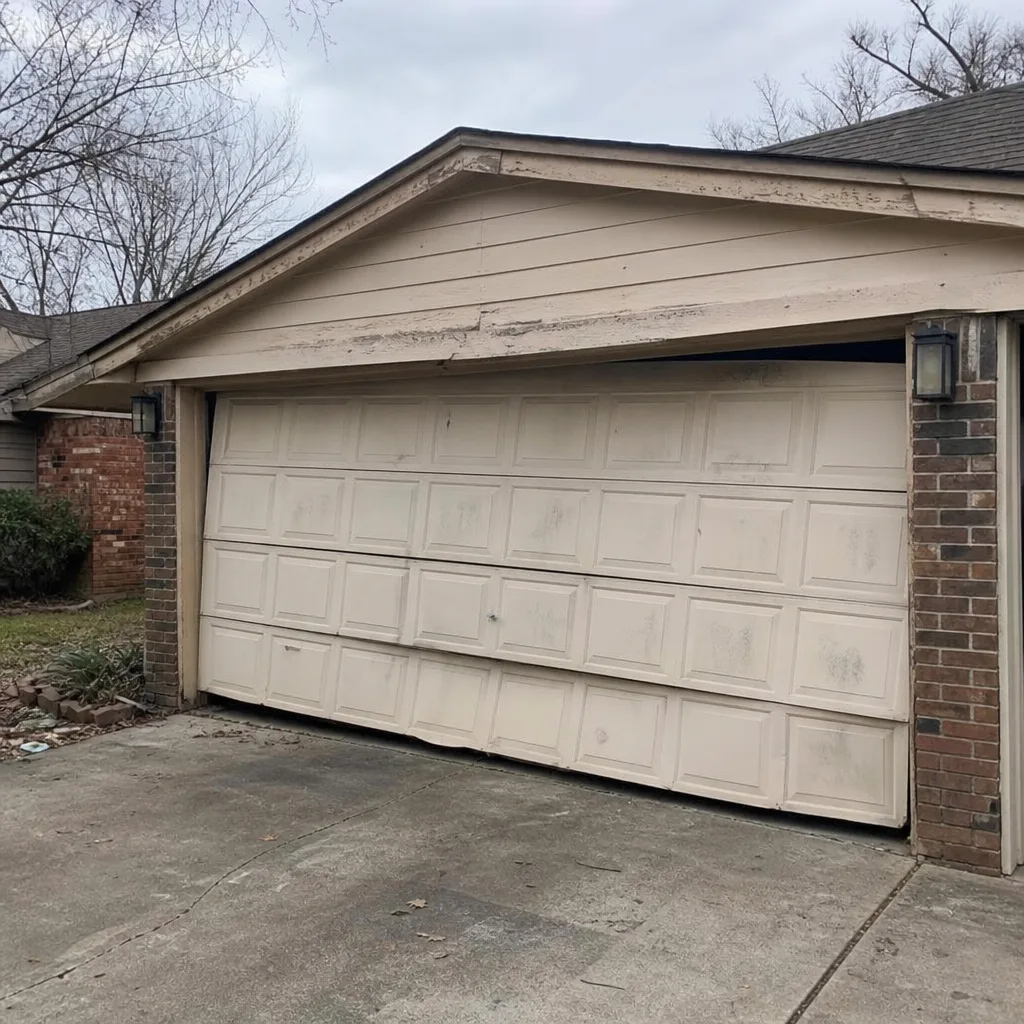 Before
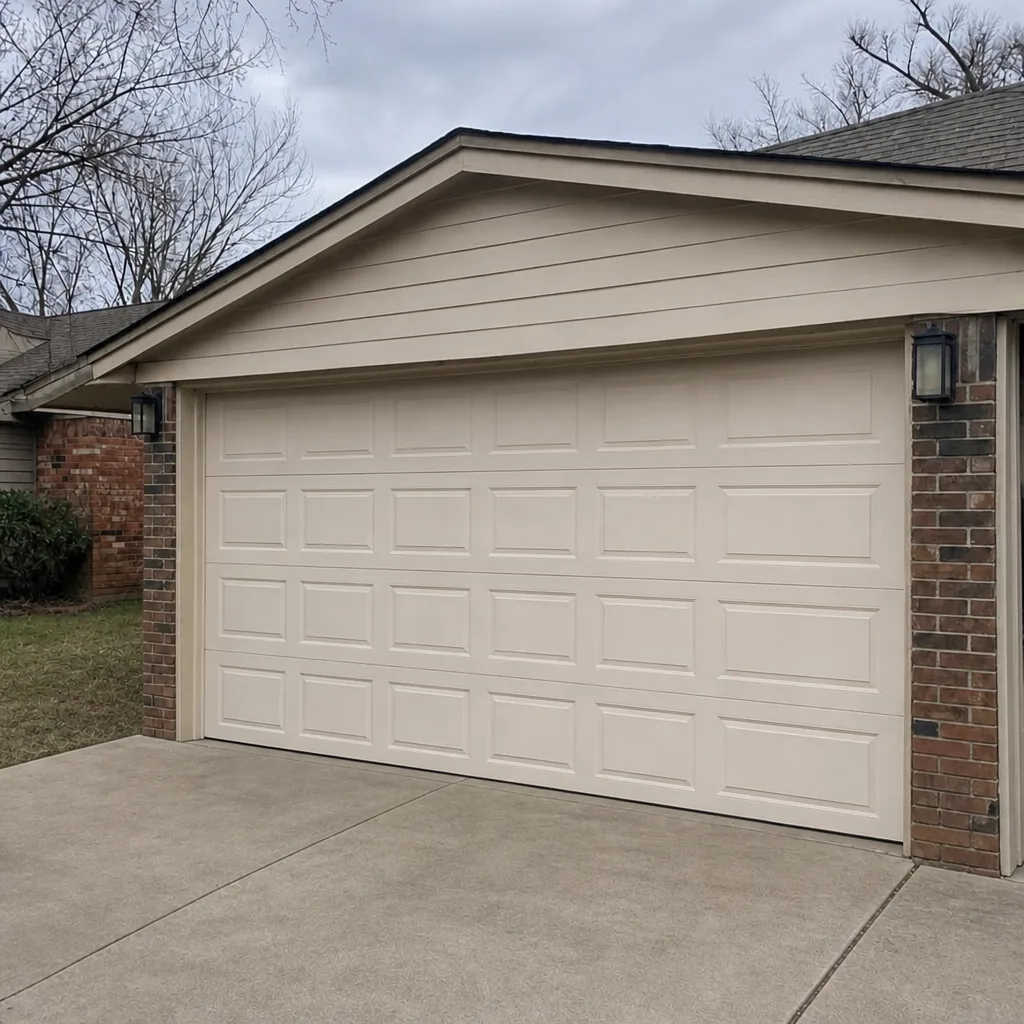 After
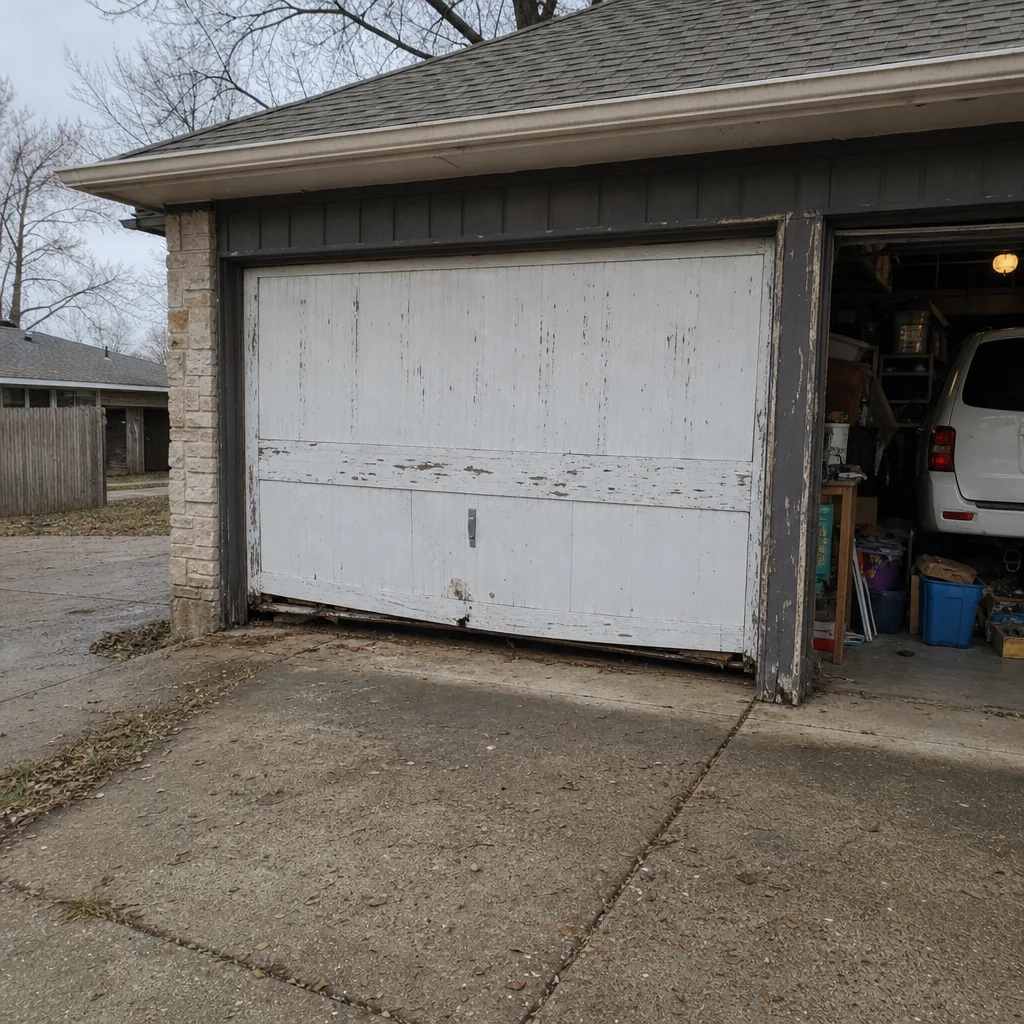 Before
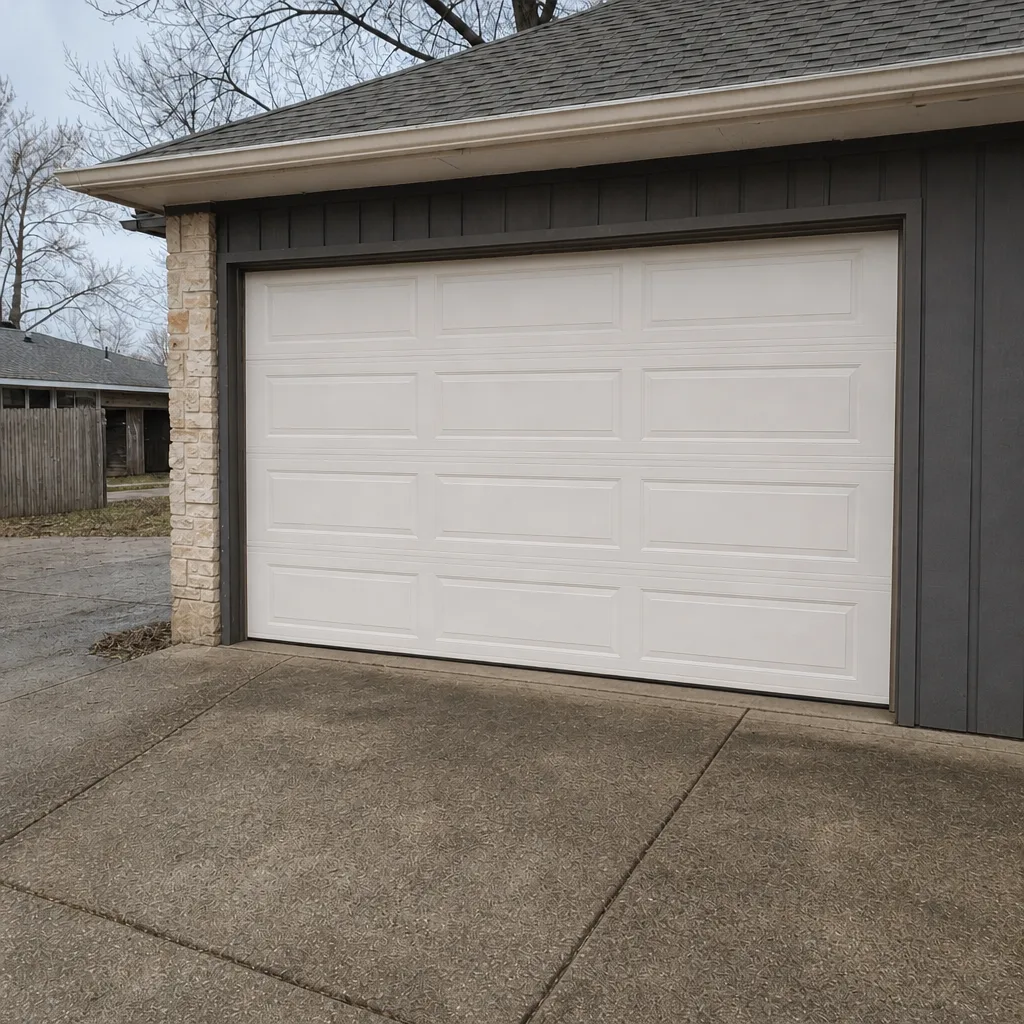 After
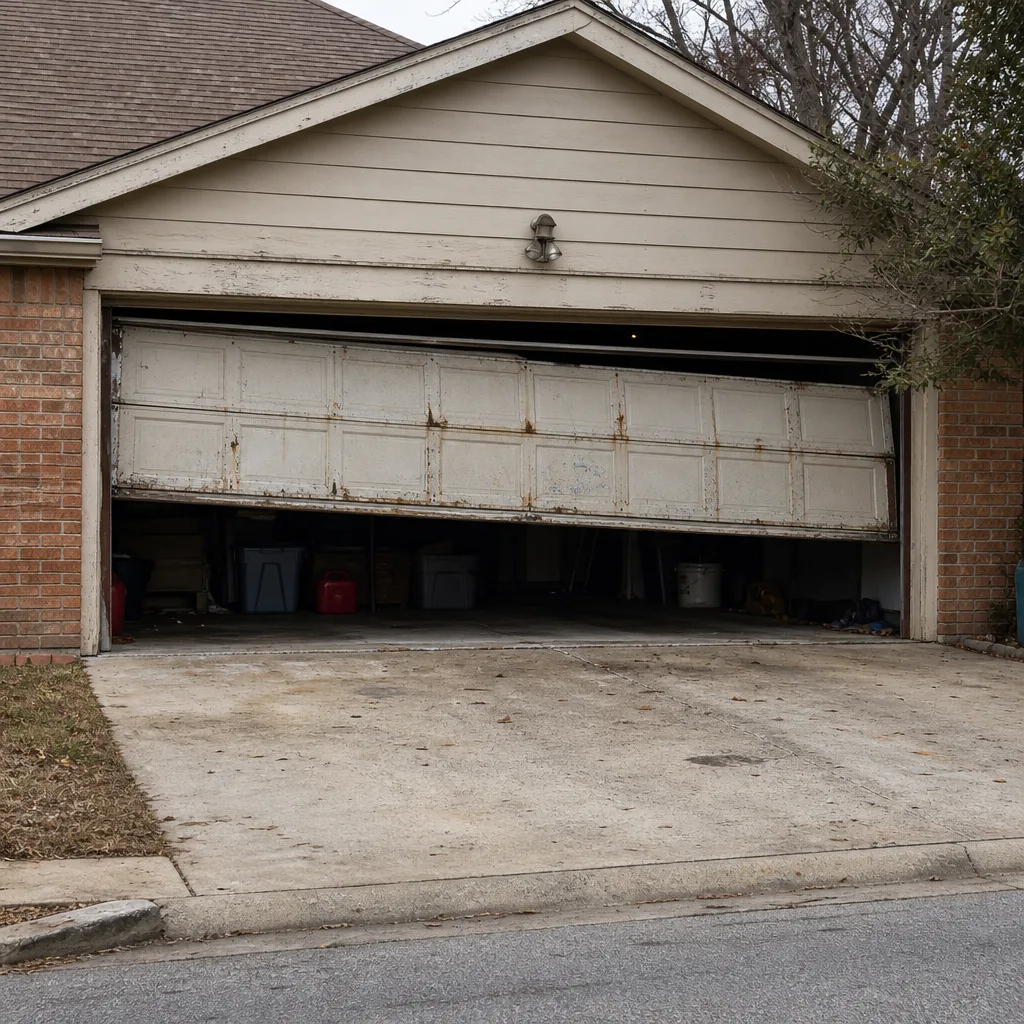 Before
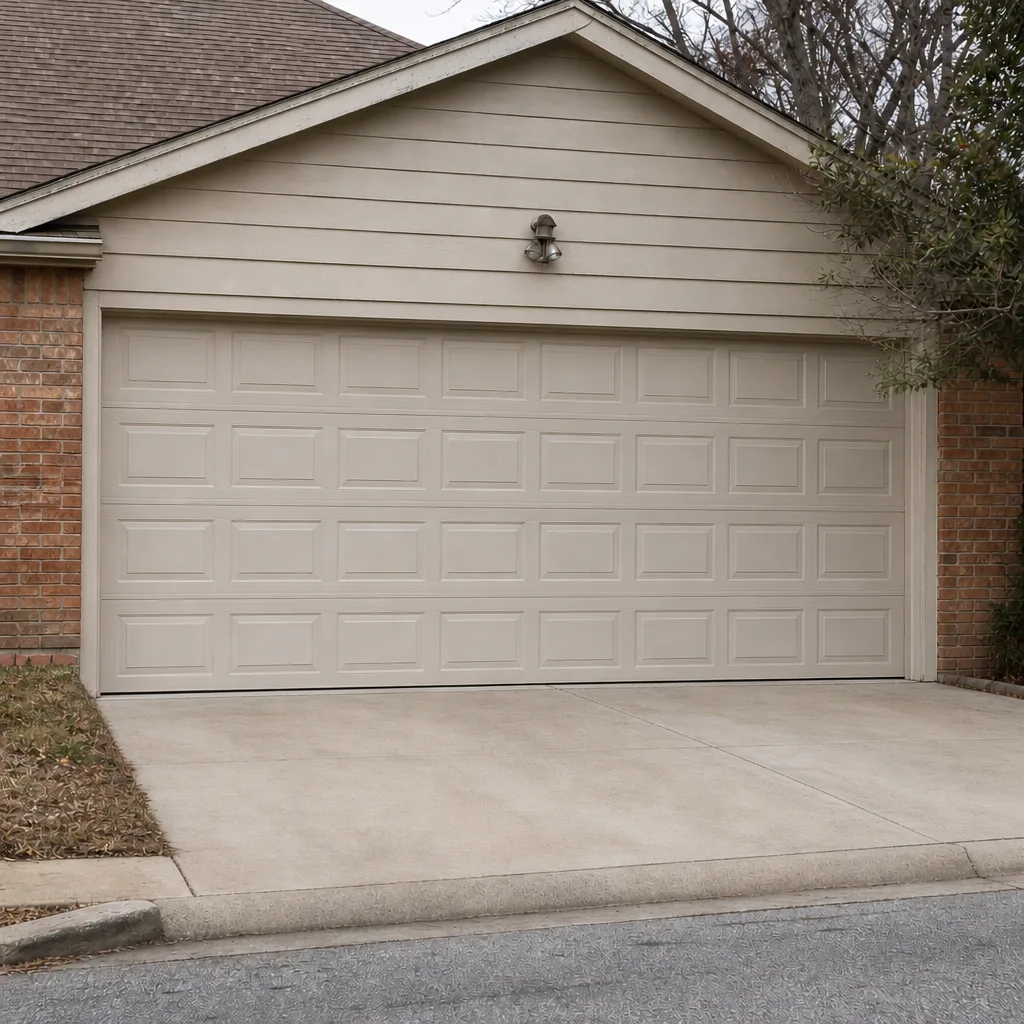 After
When to Call a Professional
Call a technician when the door won’t open or close and the opener is still trying to run; when you hear a snap or bang from the springs; when a cable is loose, frayed, or hanging; when the door is visibly crooked or off its tracks; or when a storm has damaged the door and you’re not sure whether it’s safe to operate. Those are the cases where doing it yourself risks injury or makes the repair bigger.
You can also call when the door works but something’s off: it reverses for no reason, the opener is louder than it used to be, or the door doesn’t seal along the bottom. Small problems caught early cost less than waiting for a failure. Morningstar Garage Door Repair offers free estimates in Broken Arrow – call (844) 320-3275. We answer 24/7, with fast dispatch from 7am to 7pm, Sunday through Friday.
Frequently Asked Questions
Pull the emergency release cord hanging from the opener trolley, then lift the door by hand from the bottom edge. Do this with the door fully closed whenever possible; pulling the cord with the door mid-travel can let an unpowered door drop. If the door feels heavy or doesn’t move smoothly after you release it, stop and call a technician.
Several LiftMaster and Chamberlain models include integrated battery backup, and Genie offers backup on select models. Older openers, including many Raynor models, typically don’t include it and may not accept an add-on. Check your unit’s manual or the sticker on the opener to confirm what you have before you assume it will work in an outage.
Only after you inspect it. If the door is dented but balanced, moves smoothly, and the tracks are straight, it’s usually fine. If the door is crooked, off-track, the springs look stretched or broken, or a seam is creased, don’t operate it. Call a technician for an inspection before you use it.
Take wide shots of the whole door and the garage exterior, close-ups of every dent and crease with a scale reference, photos of the tracks, hinges, and rollers, and the door’s brand and model. Measure the width and height and count the panels. Document before any repair happens unless the door is unsafe.
The price is set per job by a written estimate before any work starts, and the estimate is free. Call (844) 320-3275 for an exact quote on your door. We answer 24/7, with fast dispatch from 7am to 7pm, Sunday through Friday.
Battery backup is designed for a limited number of cycles, enough to get your car out and back in a few times during an outage. It isn’t meant for days of normal use. Test the battery by unplugging the opener and cycling the door, and keep the manual release as your fallback.
The Bottom Line
Garage door emergencies in Broken Arrow aren’t really about the door; they’re about what you know before the storm. Test your manual release with the power on. Confirm whether you have battery backup and test it. Know what a storm-damaged door looks like when the damage is structural rather than cosmetic. Document before you repair. And when the door is stuck mid-travel, when a spring has snapped, or when a cable is hanging, stop and call a professional, because those are the repairs that hurt people when they’re attempted at home.
One call covers repair, opener service, and full installation, across LiftMaster, Chamberlain, Genie, Clopay, Amarr, Wayne Dalton, Craftsman, and Raynor systems. If you’re facing a door you can’t trust, call Morningstar Garage Door Repair at (844) 320-3275 for a free estimate. We answer 24/7, with fast dispatch from 7am to 7pm, Sunday through Friday.
Written by the team at Morningstar Garage Door Repair.