
Last updated November 15, 2026
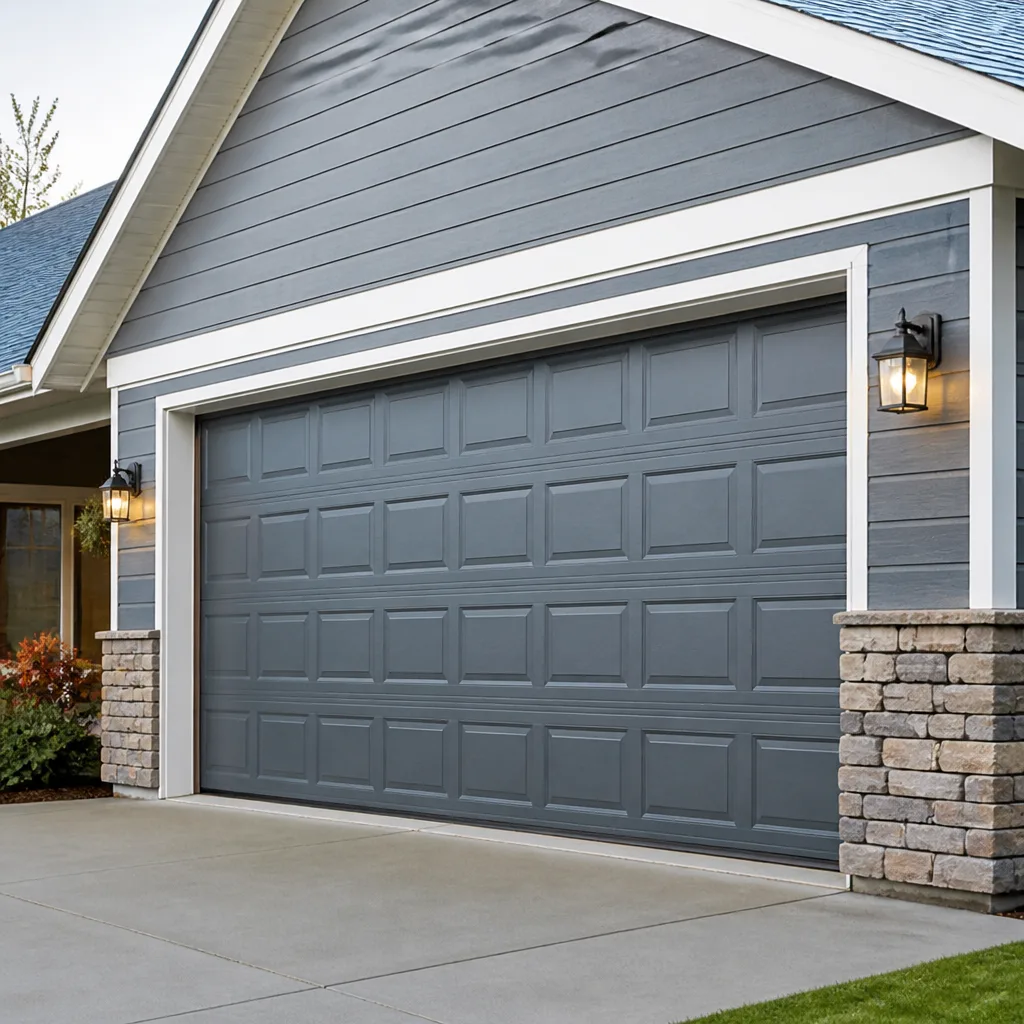 Raised-panel steel
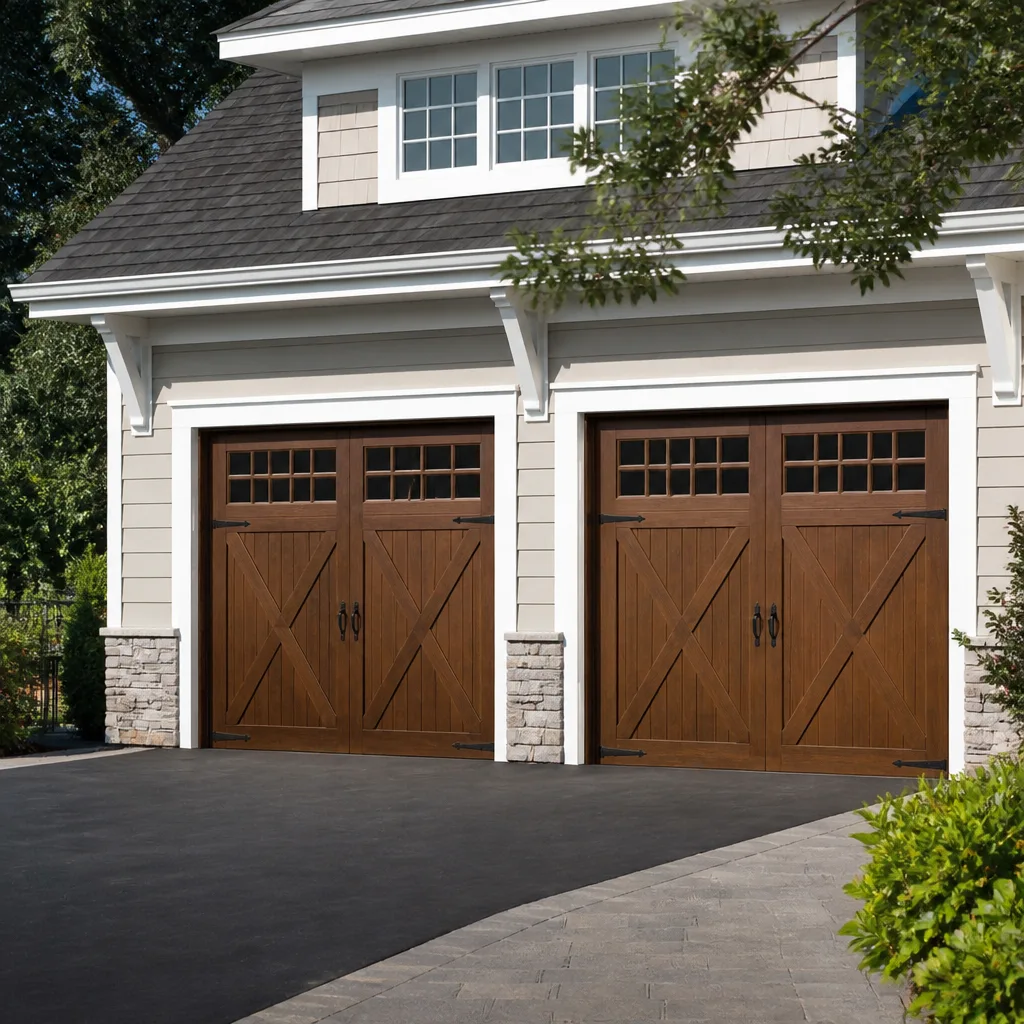 Carriage house
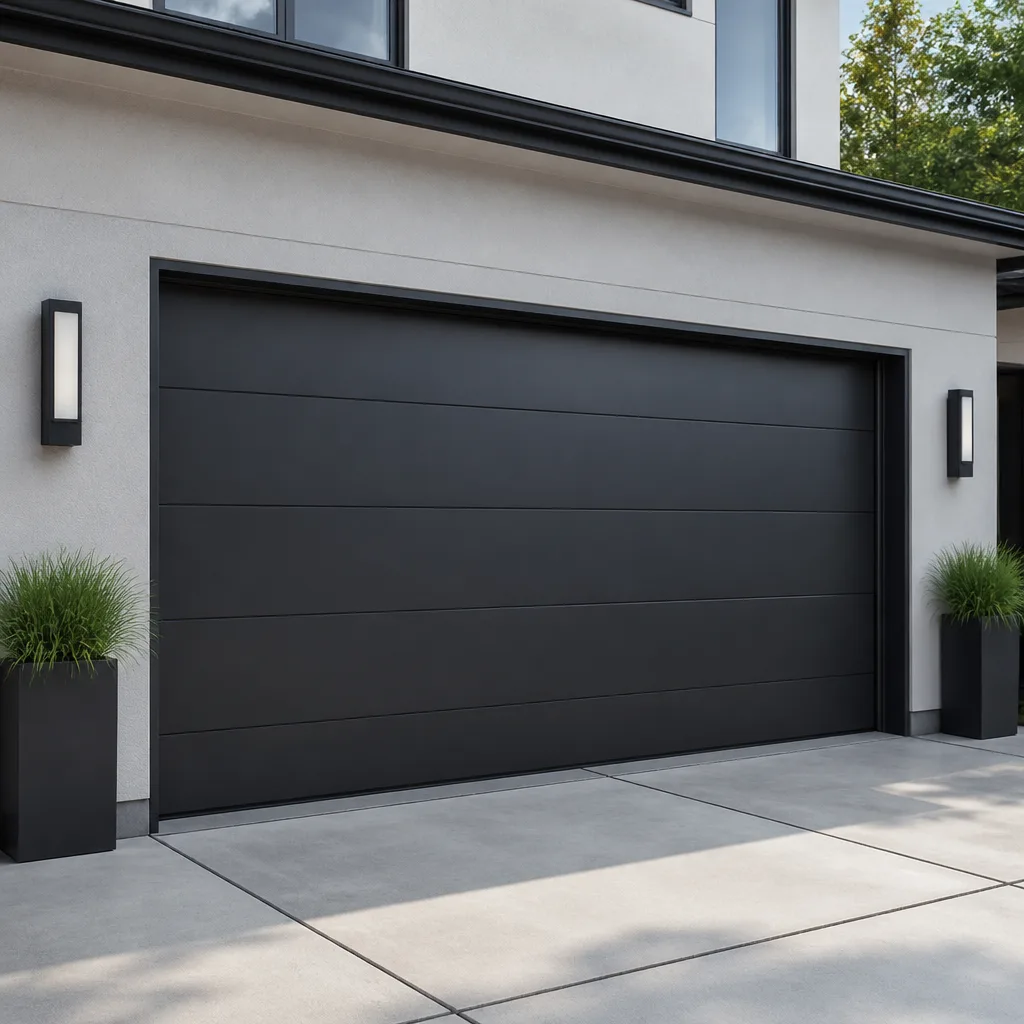 Modern flush
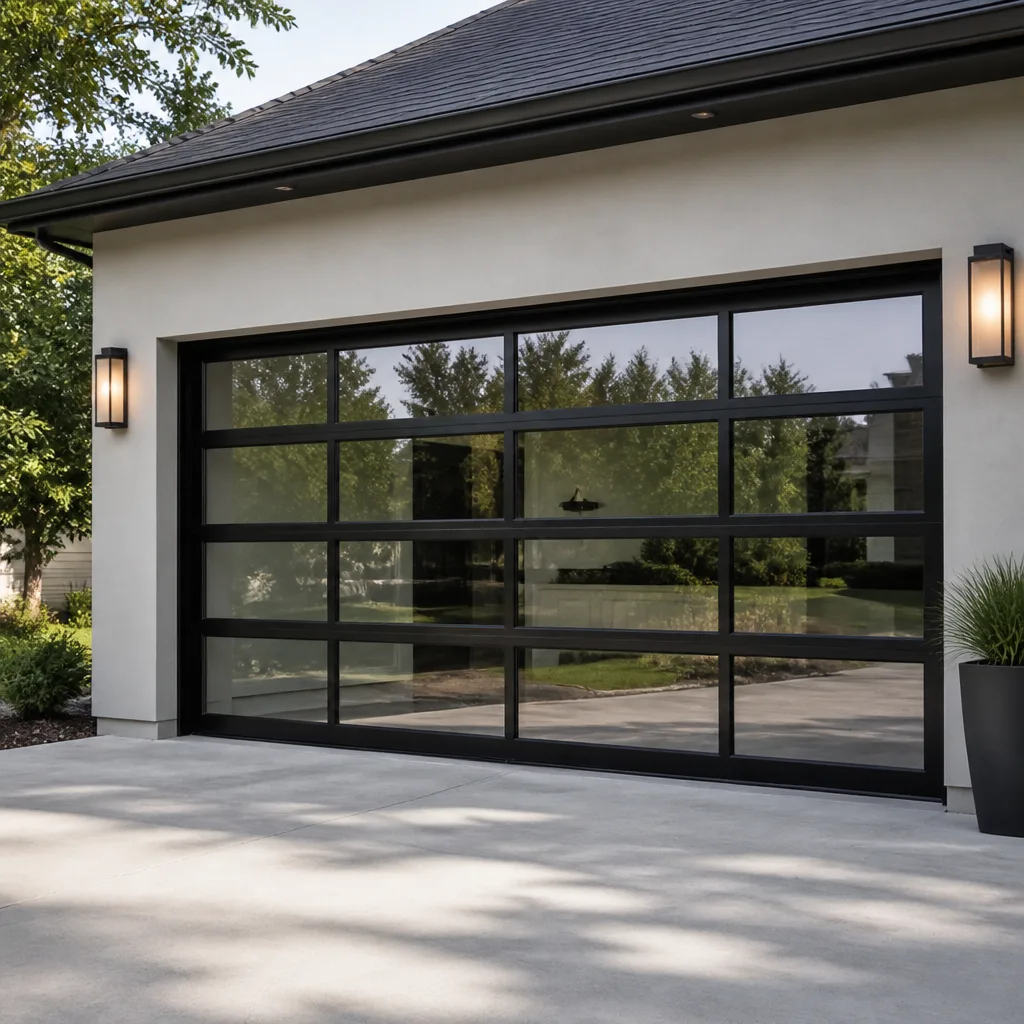 Full-view glass
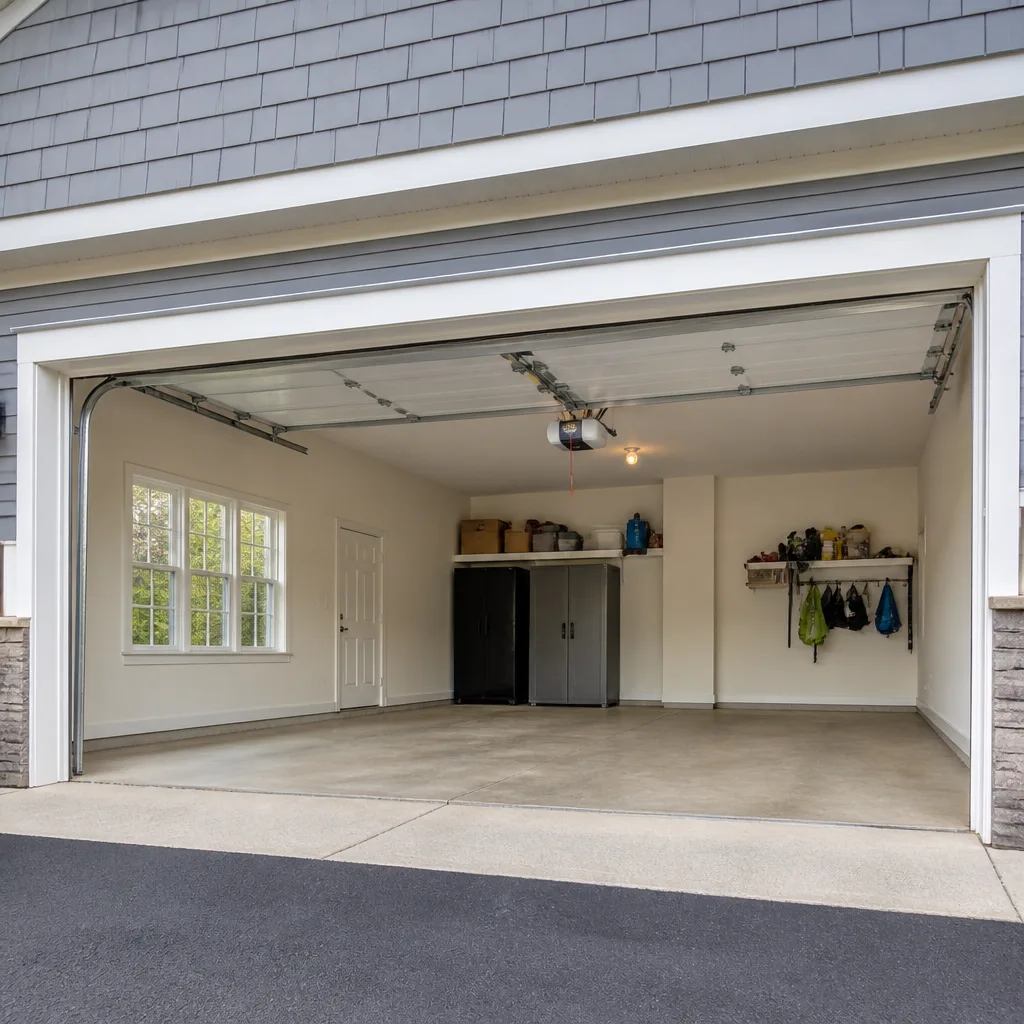 LiftMaster openers
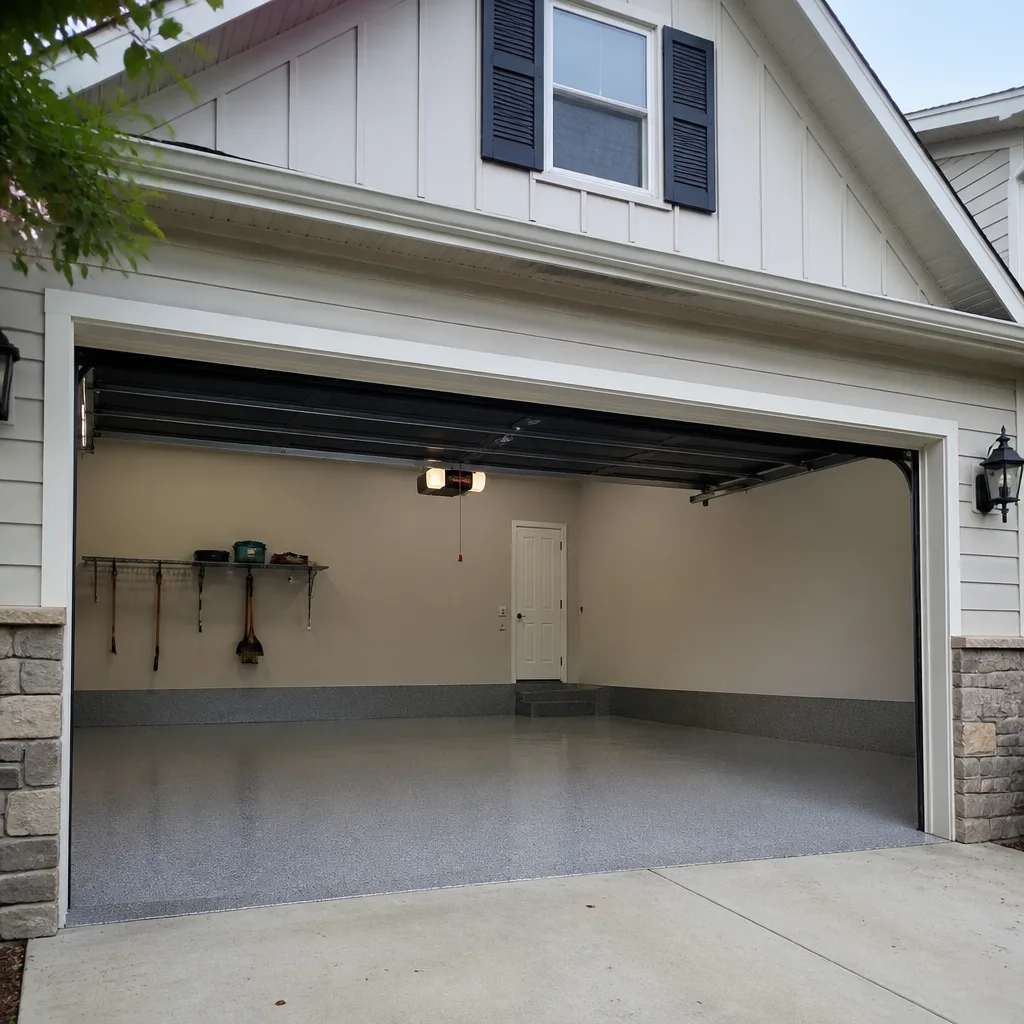 Chamberlain openers
Full 25-point door and opener safety check with every visit - springs, cables, rollers, tracks, and your LiftMaster or Chamberlain opener included
You get a price before we start. It does not change when the pro arrives.
Get your free estimateThe Complete Guide to Garage Doors in Broken Arrow
Most Broken Arrow homeowners think about their garage door exactly once: the morning it stops working. That’s the wrong time to start learning how doors are built, how openers are matched to them, and who should install the replacement. Broken Arrow’s rapid suburban growth has filled new subdivisions with builder-grade steel panels specified for milder climates than an Oklahoma spring delivers, and the clay under those slabs moves more than most buyers realize. This guide covers what actually holds up here: soil-driven alignment problems, wind exposure, humidity swings between January and August, and HOA rules in neighborhoods like Stone Canyon and Bellagio Estates. You’ll finish knowing how to choose a door, an opener, and an installer for Broken Arrow conditions specifically.
Quick Answer
A garage door in Broken Arrow should be a steel door with a wind-load rating suited to this region’s storm exposure, an opener sized to the door’s weight, and an installer who checks the opening and slab before ordering anything. Clay soil movement, humidity swings, and HOA architectural rules in Broken Arrow subdivisions matter more to the final result than brand name alone. Buy for the conditions here, not for the showroom.
Styles & brands we work with
- Raised-panel steel
- Carriage house
- Modern flush
- Full-view glass
- LiftMaster openers
- Chamberlain openers
Table of Contents
- How Broken Arrow’s Clay Soil Affects Your Garage Door
- Wind Load Ratings and Oklahoma Storm Exposure
- Which Door Materials Hold Up in Broken Arrow Humidity?
- Choosing an Opener for Your Door and Your Home
- The Broken Arrow Contractor Market: Who Does What
- HOA Specs in Stone Canyon, Bellagio Estates, and South Broken Arrow
- Step by Step: Replacing a Garage Door in Broken Arrow
- A Simple Maintenance Routine for Oklahoma Doors
How Broken Arrow’s Clay Soil Affects Your Garage Door
Broken Arrow sits on heavy clay that swells when it’s wet and shrinks when it dries. That movement happens at the foundation level, and a garage slab is usually the first place a homeowner notices the result. Doors that once closed flush start catching on one side. A gap appears at the bottom corner. The opener strains a little more each month. None of it is the door’s fault, and replacing panels won’t fix it.
Before any replacement, the opening itself needs to be checked. A door that’s out of square will drag against a brand-new panel the same way it dragged against the old one.
What a proper check covers:
- Whether the slab has settled or heaved, and on which side
- Whether the wood jambs are plumb and the header is level
- Whether the tracks are parallel and evenly spaced top to bottom
- Whether the spring system is balanced against the door’s actual weight
When the frame is off, an installer can correct the track and jamb geometry so the new door runs clean. What no installer can do is stop the soil from moving. That’s why Broken Arrow homeowners should treat alignment as a maintenance item, not a one-time fix. A door that gets a quick check after the wettest and driest stretches of the year lasts longer and puts less strain on the opener. Our technicians have up to 13 years of experience, and the pattern is consistent: doors that run rough in Broken Arrow usually trace back to the opening, not the panel. If your door is already binding, garage door repair starts with that measurement.
Wind Load Ratings and Oklahoma Storm Exposure
Broken Arrow is tornado country, and the garage door is the largest opening on the front of most homes. That makes wind rating the single most overlooked spec on a builder-grade door. Standard production doors are often specified for mild wind pressure. A door rated for that pressure is not the same product as one built for the gusts that come through this part of Oklahoma.
Wind rating is about more than panel thickness. It covers reinforcement struts, heavier gauge steel, and hardware rated to hold the door in its tracks under pressure. A sectional door that fails under load doesn’t just get damaged: it can come out of the opening entirely.
What to ask before you buy:
- What wind-load rating does this specific door carry, in writing?
- Does the rating apply to the door as installed, with the struts and hardware included?
- Is the reinforcement sized for the door width, or is it a universal add-on?
- Does the opener’s mounting and the track anchoring account for that load?
Builders in Broken Arrow subdivisions often trim cost here because the door looks identical from the street. It isn’t. If you’re replacing a door on a home built in the last two decades, ask what the original spec was and compare. In our experience, most homeowners have never seen the wind rating on their own door. Getting it in writing before installation is the difference between a door that survives a storm and one that becomes an insurance conversation.
Which Door Materials Hold Up in Broken Arrow Humidity?
Broken Arrow swings between damp winter air and dry, oven-hot August afternoons. Every door material reacts to that cycle differently, and the material you choose decides how much upkeep you’re signing up for.
Steel
Steel is the standard choice here and the right one for most homes, provided the gauge is heavy enough. Thicker steel resists denting and resists the flex that shows up when a door is cycled thousands of times. The weak point is the bottom edge, where moisture collects. A door with a proper bottom seal and a painted or galvanized lower section handles Broken Arrow humidity far better than one without. Insulated steel panels also cut the heat transfer into an attached garage during summer.
Faux wood composite
Composite doors give you the look of wood without the movement. That matters in a climate with this much humidity swing, because real wood expands and contracts and painted wood needs re-coating as the seasons pass. Composite holds its finish through the cycle with less attention, and it’s a popular choice in Broken Arrow neighborhoods where HOA rules require a wood-look carriage style.
Full wood
Wood is the warmest-looking option and the most demanding. In Broken Arrow it needs consistent sealing and repainting, and any spot where moisture gets behind the finish will move. Homeowners who want wood should plan for upkeep, not just installation.
Insulation is worth deciding at the same time as material. An attached garage shares a wall with the house, and an insulated door keeps that space more usable through an Oklahoma summer. Whether your door needs a professional look before you decide, a free estimate is the fastest way to get a straight answer on what fits your opening.
Choosing an Opener for Your Door and Your Home
The opener is where most buyers make an expensive mistake: they pick the door first and treat the opener as an afterthought. The two have to be matched. A heavy insulated door needs an opener rated for that weight and lift. A light single-car door doesn’t benefit from an oversized unit.
Opener type matters too, and most Broken Arrow homes fall into three groups:
- Belt drive: quietest option, good for bedrooms above or beside the garage
- Chain drive: durable and simple, with more mechanical noise
- Jackshaft (wall-mount): mounts beside the door instead of on the ceiling, useful when headroom is tight or you want the ceiling clear for storage
Smart-home capability is the other decision. Most modern units from LiftMaster and Chamberlain connect to a phone app and can notify you when the door opens. That’s genuinely useful if you’re away during the day. The catch is that smart features depend on the unit’s control board, and a board failure takes the app down with the door. We treat opener diagnostics as its own specialty for that reason. Most opener issues come down to a handful of causes: a failing logic board, a stripped gear, a remote that needs re-pairing, or a safety sensor knocked out of alignment by a bump against the track. Diagnosing by system rather than by guesswork is what keeps a homeowner from paying for a whole new unit when a component is the actual problem. Our garage door opener repair covers LiftMaster, Chamberlain, Genie, Craftsman, and the rest of the common residential brands.
The Broken Arrow Contractor Market: Who Does What
Broken Arrow has three kinds of garage door providers, and knowing which one you’re calling saves real time. Some outfits install only. Some handle repair and service calls but push installation to a dealer. A smaller number cover repair, opener service, and installation under one call, which matters more than it sounds when your needs change over the life of a door.
Here’s how to read the market:
- Installation-only companies. They order and hang new doors. Fine for a straight replacement, less useful when an existing door needs diagnosis first.
- Repair-and-service companies. They handle springs, cables, rollers, and openers. Many won’t quote a full replacement.
- Full-lifecycle providers. They cover the door from first repair through installation, and they carry parts knowledge across manufacturer ecosystems.
The third category is where most homeowners end up happiest, because the same company that diagnosed the door can quote the replacement. Brand fluency matters here too. A technician who knows Clopay, Amarr, Wayne Dalton, and Raynor systems reads a problem differently than one guessing at a generic door.
Ask three questions on the phone before you book:
- Do you service both the door and the opener?
- Can you source parts for my door’s manufacturer?
- Is the estimate written, and is the price agreed before work starts?
A provider who can answer all three without hesitation is a provider who does this work every day in Broken Arrow. If you’re weighing repair against replacement, see the Broken Arrow service overview for what each job involves.
HOA Specs in Stone Canyon, Bellagio Estates, and South Broken Arrow
Plenty of garage door guides skip HOA rules entirely. In Broken Arrow, they’re a real decision layer. Neighborhoods like Stone Canyon and Bellagio Estates, along with several South Broken Arrow subdivisions, carry architectural standards that govern what your replacement door can look like.
Typical HOA requirements cover:
- Panel style, raised or recessed, and window configuration
- Color, often matched to an approved palette
- Material appearance, including wood-look requirements for certain streets
- Whether a door may be replaced with a different brand or model than the original build
Here’s the practical problem: the door you want may not be the door your HOA approves, and the door your HOA approves may not be the door your garage opening was built for. Both checks have to happen before the order goes in. Pull your architectural rules and the approved color list first, then compare against actual door models and their wind ratings. That sequence saves the cost of a reorder and the delay of a second approval.
It also affects material choice. If the rules call for a carriage-style wood look, a composite panel gets you there without the upkeep of real wood in Oklahoma humidity. If the rules are silent on style, you have more room to choose the heavier steel gauge and better insulation this climate rewards. Either way, get the approval in writing before installation day. Installers who work regularly in Broken Arrow know which neighborhoods ask for documentation, and it’s worth asking that question when you call.
Step by Step: Replacing a Garage Door in Broken Arrow
A replacement is a measured, ordered, scheduled job, not a same-day repair. Understanding the sequence keeps you from being surprised by the timeline.
- Measure the opening, not the old door. The installer checks width, height, headroom, and backroom, plus whether the slab and jambs are square. This is where clay movement gets caught.
- Confirm HOA and neighborhood rules. Style, color, and material go on the table before any model is chosen.
- Choose door and wind rating together. Match the rating to Broken Arrow’s storm exposure and get it documented on the quote.
- Match the opener to the new door’s weight. An existing opener may be fine, or it may be undersized for a heavier insulated door. This gets decided before the door arrives.
- Get a written estimate. The price is quoted and agreed before any work starts. Ask for the wind rating and model number on that estimate.
- Order and schedule. New doors are built to spec, so there’s a lead time between order and install.
- Install and test. Tracks, springs, and opener are set and balanced, then the door is cycled and the safety sensors verified.
Two of these steps, the opening measurement and the opener match, are where most problems later originate. A door that was ordered off a nominal size instead of the actual opening will fight the frame from day one. An opener that was carried over from a lighter door will run hot and fail early. For full replacement work, Morningstar Garage Door Repair handles the measure, the door, and the opener as one job so those steps stay connected.
A Simple Maintenance Routine for Oklahoma Doors
Garage doors in Broken Arrow don’t need much, but the little they need matters because the climate works against them. The routine below is what we recommend to homeowners who want maximum life out of a door.
- Cycle the door manually once a season. Disconnect the opener and lift the door by hand. It should move smoothly and stay put halfway up. A door that won’t hold position has a spring or balance issue.
- Check the bottom seal. Broken Arrow humidity collects at the bottom edge. A cracked seal lets moisture and pests in.
- Look at the tracks after wet and dry stretches. Clay movement shows up here first. Catching a shifted track early is far cheaper than replacing rollers worn by dragging.
- Test the safety sensors monthly. Put an object in the door’s path and confirm it reverses. If it doesn’t, stop using the opener until it’s checked.
- Lubricate rollers and hinges with a garage-door lubricant. Not WD-40, and not grease that attracts dust.
One safety point we won’t skip: the springs, cables, and bottom brackets on a sectional door are under high tension, and a spring or cable that lets go can cause serious injury. Never try to adjust or replace springs or cables yourself. That work belongs to a trained technician with the right winding bars and the right procedure. A visual check is the homeowner’s job; repair is not. When a spring breaks, it usually announces itself with a loud bang from an otherwise quiet door, and the door will feel extremely heavy if you try to lift it. Call for help at that point and leave it be.
Common Mistakes to Avoid
- Replacing panels on a door that’s out of alignment. If Broken Arrow’s clay has shifted your slab, new panels will drag exactly like the old ones. Measure the opening first, then decide.
- Buying the cheapest builder-grade door in a storm-exposed area. The look from the street doesn’t tell you the wind rating. Ask for the rating in writing and compare it to what this region can deliver.
- Keeping an old opener when you upgrade to a heavy insulated door. The opener was sized for the old weight. Running it beyond its lift rating shortens its life and strains the door.
- Ordering a door before checking HOA approval. In Stone Canyon, Bellagio Estates, and South Broken Arrow subdivisions, an unapproved style or color can mean a reorder and a second wait.
- Choosing real wood without planning for upkeep. Wood looks great in Broken Arrow, and it needs consistent sealing to survive the humidity swing between January and August.
- Guessing at a brand when sourcing parts. A Craftsman opener and a LiftMaster door system don’t share components. Know your model before ordering, or let a technician identify it.
- Attempting spring or cable work. These parts are under high tension, and this is the one garage door task that genuinely belongs to a professional.
See the difference
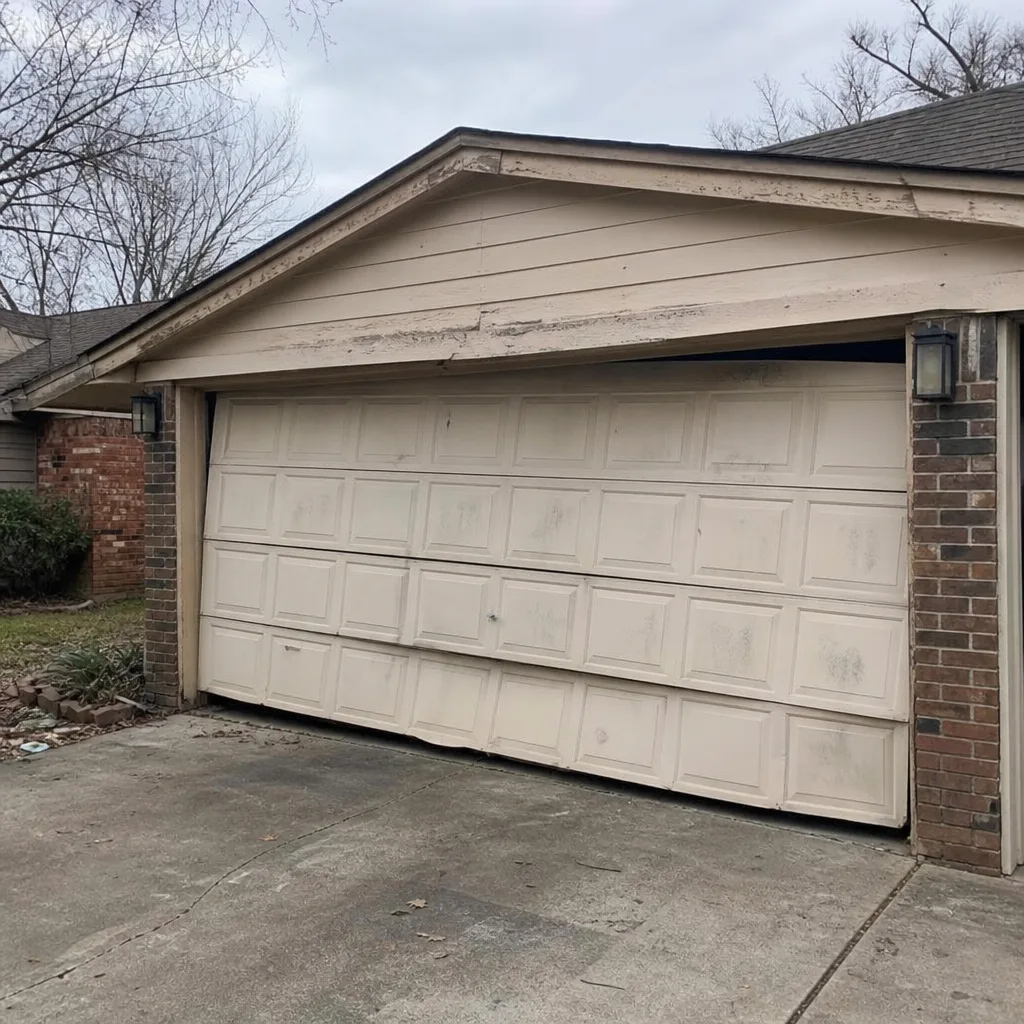 Before
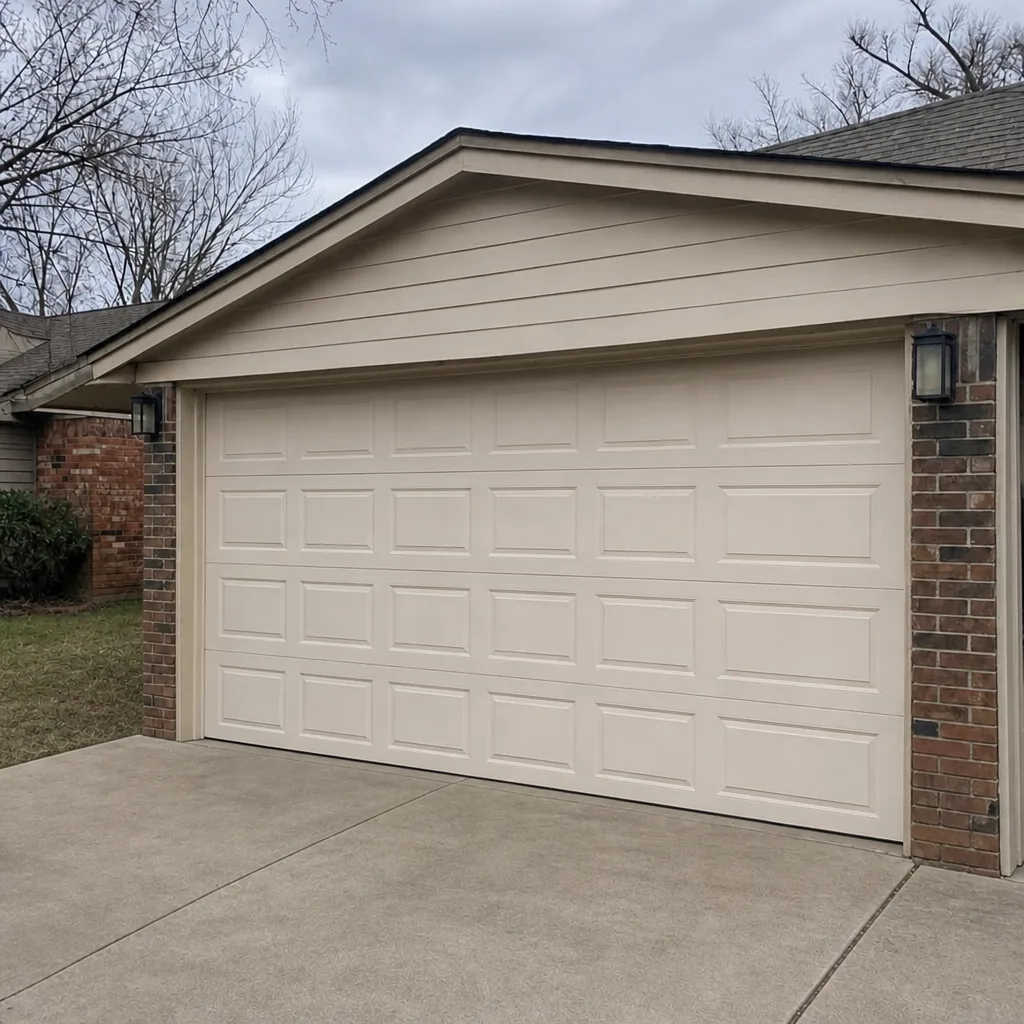 After
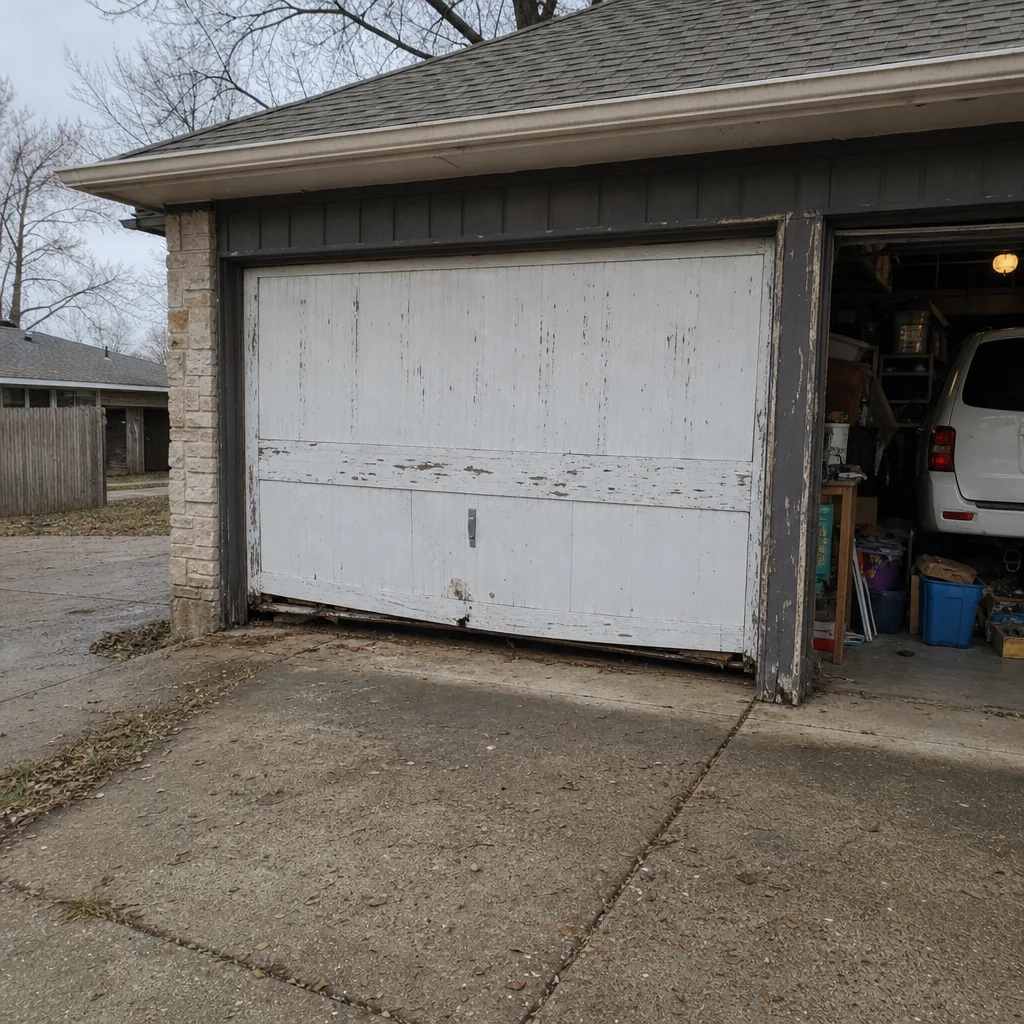 Before
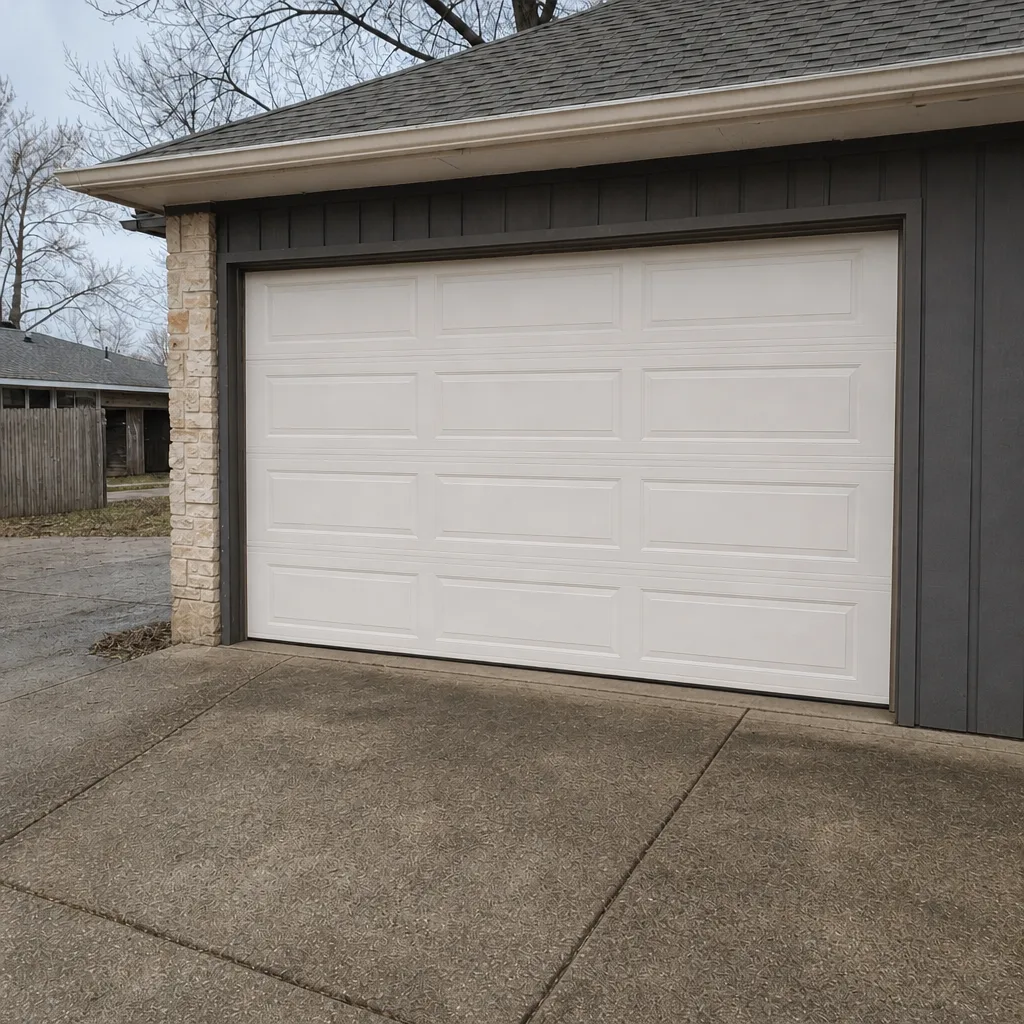 After
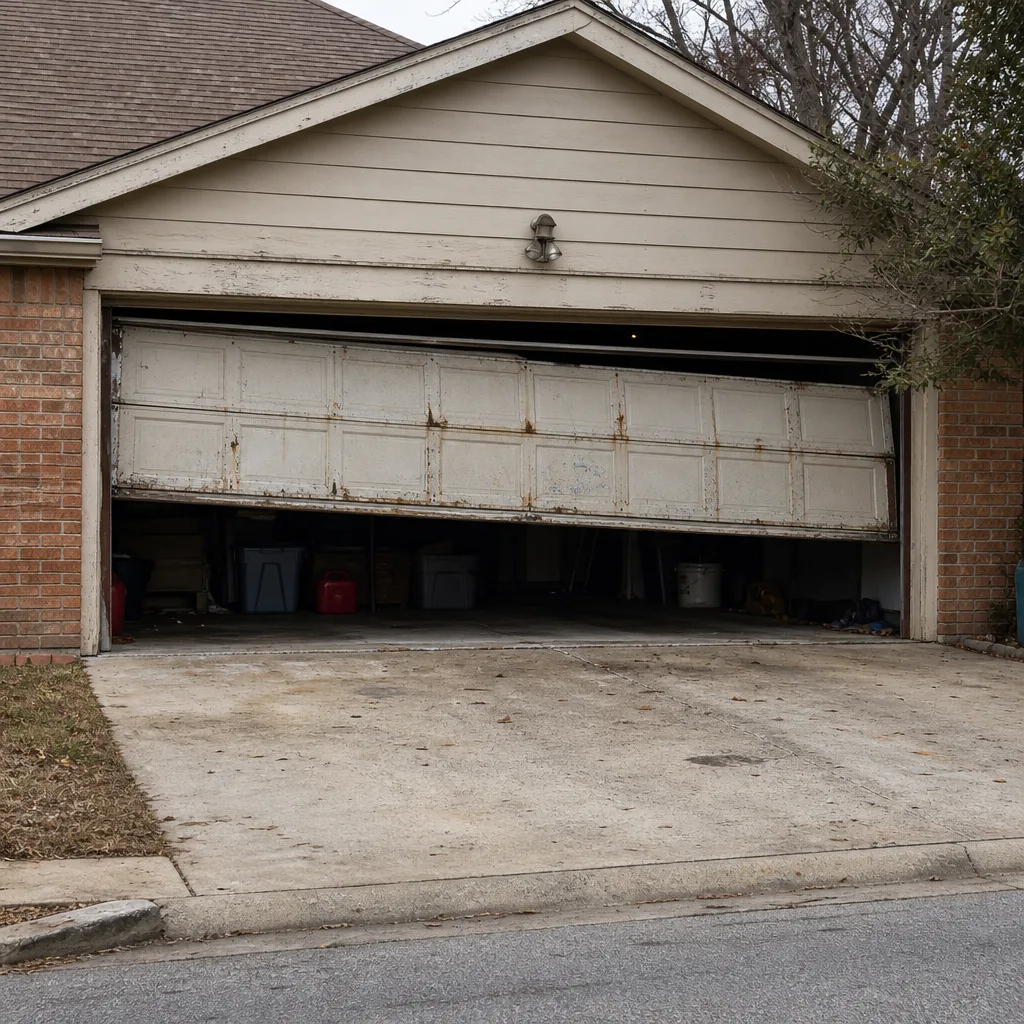 Before
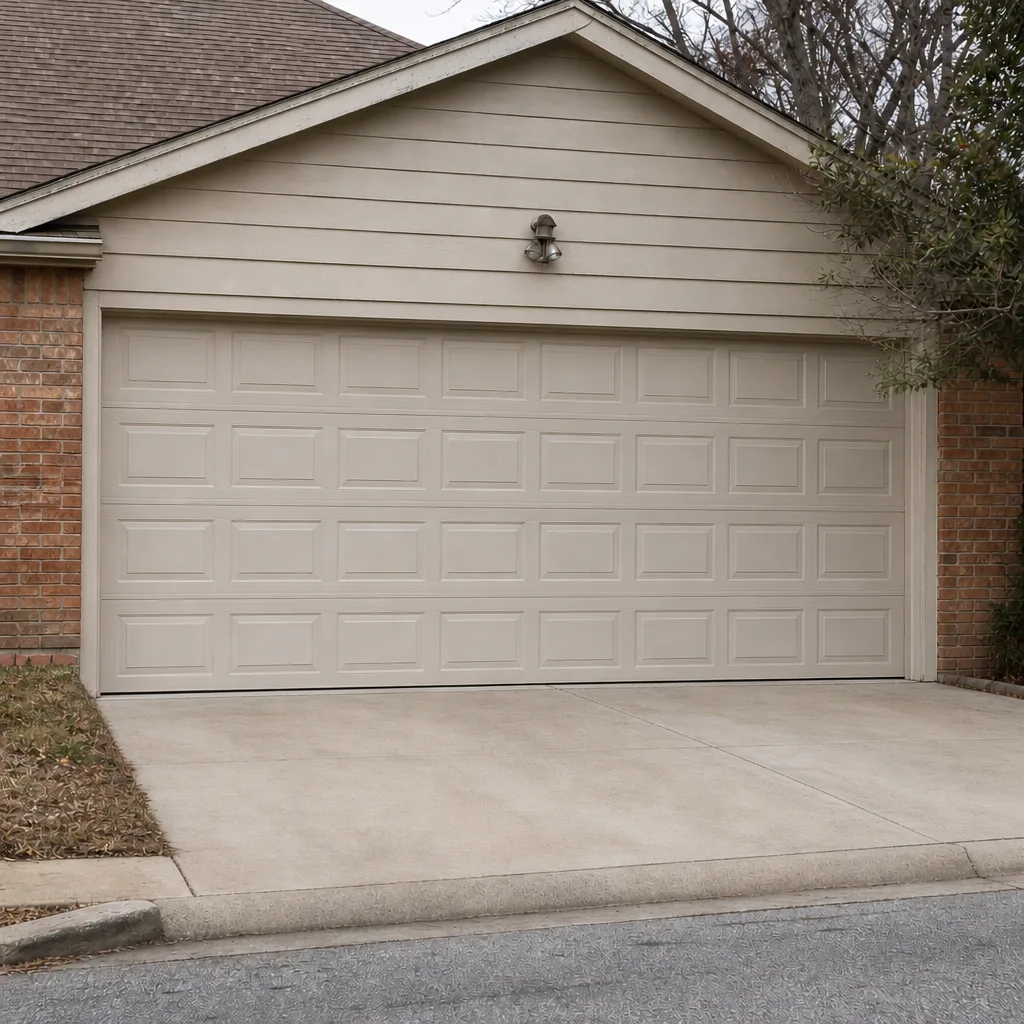 After
When to Call a Professional
Some situations are DIY territory: a remote that needs re-pairing, a sensor that got bumped, a squeaky roller. Others aren’t. Call a professional when a spring breaks, when the door comes down unevenly or won’t stay up, when a cable looks frayed or slack, when the opener strains or reverses for no obvious reason, or when the door has started binding against the frame after a wet or dry stretch. Each of those points to a component that needs a trained eye, and some involve parts under high tension.
Morningstar Garage Door Repair offers free estimates in Broken Arrow. Call (844) 320-3275. We answer 24/7. Fast dispatch from 7am to 7pm, Sunday through Friday.
Frequently Asked Questions
An insulated steel door in a heavy gauge with a wind-load rating suited to this region’s storm exposure is the right default for Broken Arrow. Steel handles the humidity swing better than real wood with far less upkeep, and insulation keeps an attached garage more usable in summer. Get the wind rating in writing, since builder-grade doors often carry a milder spec than the conditions here call for.
Disconnect the opener and lift the door by hand. If it moves smoothly and stays put halfway up, the door and spring system are healthy and the fault is likely in the opener. If it’s heavy, binds, or won’t hold position, the problem is the door’s balance and hardware. That five-minute check tells a technician which system to diagnose first, and it’s the reason we treat opener service as a separate specialty.
Often, yes. Neighborhoods including Stone Canyon and Bellagio Estates, plus several South Broken Arrow subdivisions, carry architectural rules covering panel style, color, and sometimes material appearance. Pull the approved list and get your choice confirmed before ordering, because an unapproved door means a reorder and a second approval cycle. Call (844) 320-3275 for a free estimate once you know what your HOA allows.
Broken Arrow’s clay soil swells and shrinks with moisture, and that movement shifts foundations and slabs. A garage door is usually the first place it shows: a gap at one corner, a door that catches on one side, or tracks that drift out of parallel. Realigning the tracks and jambs fixes the symptom, but the soil will keep moving, so a periodic check after the wettest and driest stretches is worth building into your routine.
We work on the eight most common residential brands: LiftMaster, Chamberlain, Genie, Clopay, Amarr, Wayne Dalton, Craftsman, and Raynor. That covers the vast majority of systems in Broken Arrow homes. Knowing the brand and model matters because it determines which parts fit and how the diagnostic should go. Call (844) 320-3275 with your model if you have it, or we’ll identify it on site.
The installation itself is typically a single visit, but the full timeline runs longer because a new door is measured, ordered to spec, and then scheduled. Measuring the opening first, confirming HOA approval, and matching the opener to the new door’s weight all happen before the door arrives. Get a written estimate so the price and the spec are agreed before any work starts. Call (844) 320-3275 for a free measure and quote.
The Bottom Line
Garage doors in Broken Arrow fail or underperform for reasons that have little to do with brand and everything to do with conditions. Clay soil moves the opening. Oklahoma wind punishes a door rated for a milder climate. Humidity swings test your material choice between January and August. HOA rules in neighborhoods like Stone Canyon and Bellagio Estates add a step most guides skip. Choose a door rated for this region, match the opener to its weight, check your opening and your HOA rules before you order, and leave spring and cable work to a trained technician. One call can cover repair, opener service, and full installation.
Call (844) 320-3275 for a free estimate. We answer 24/7. Fast dispatch from 7am to 7pm, Sunday through Friday.
Written by the team at Morningstar Garage Door Repair.