
Last updated November 15, 2026
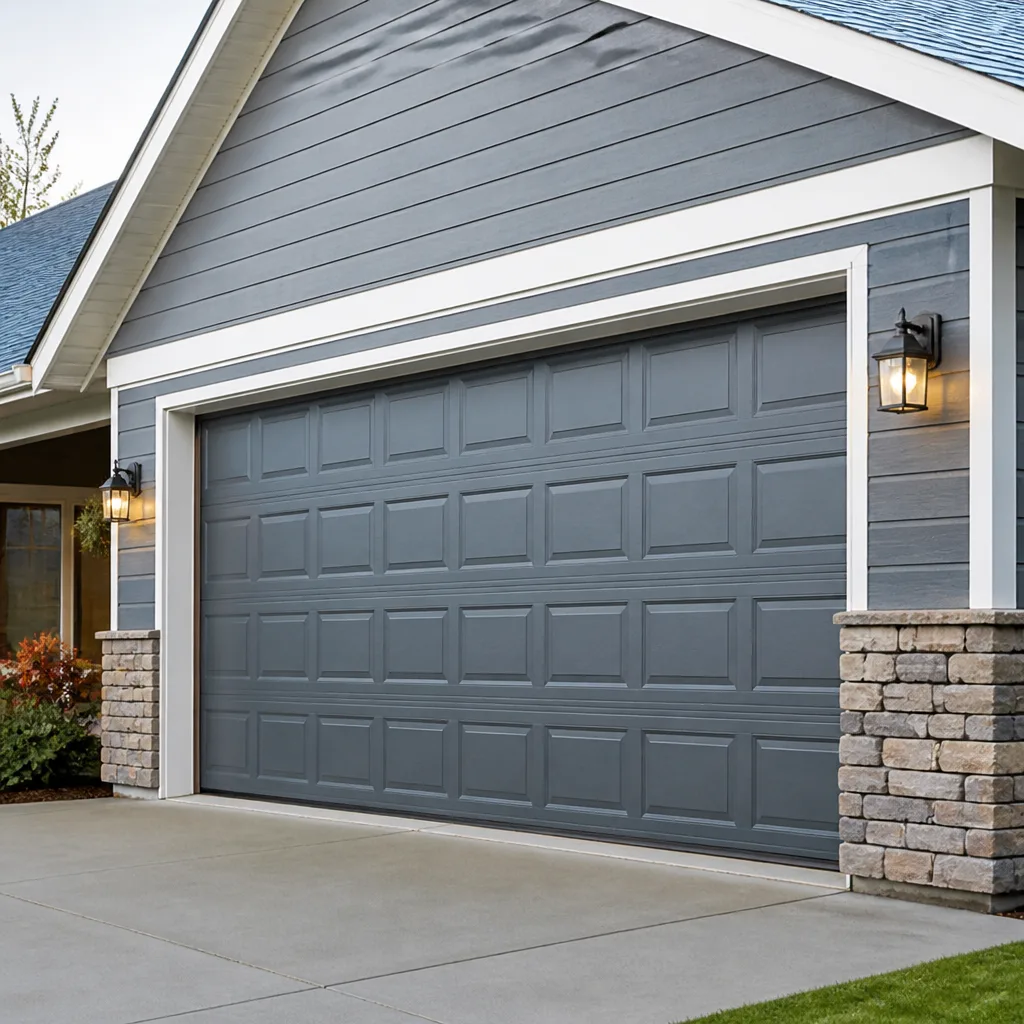 Raised-panel steel
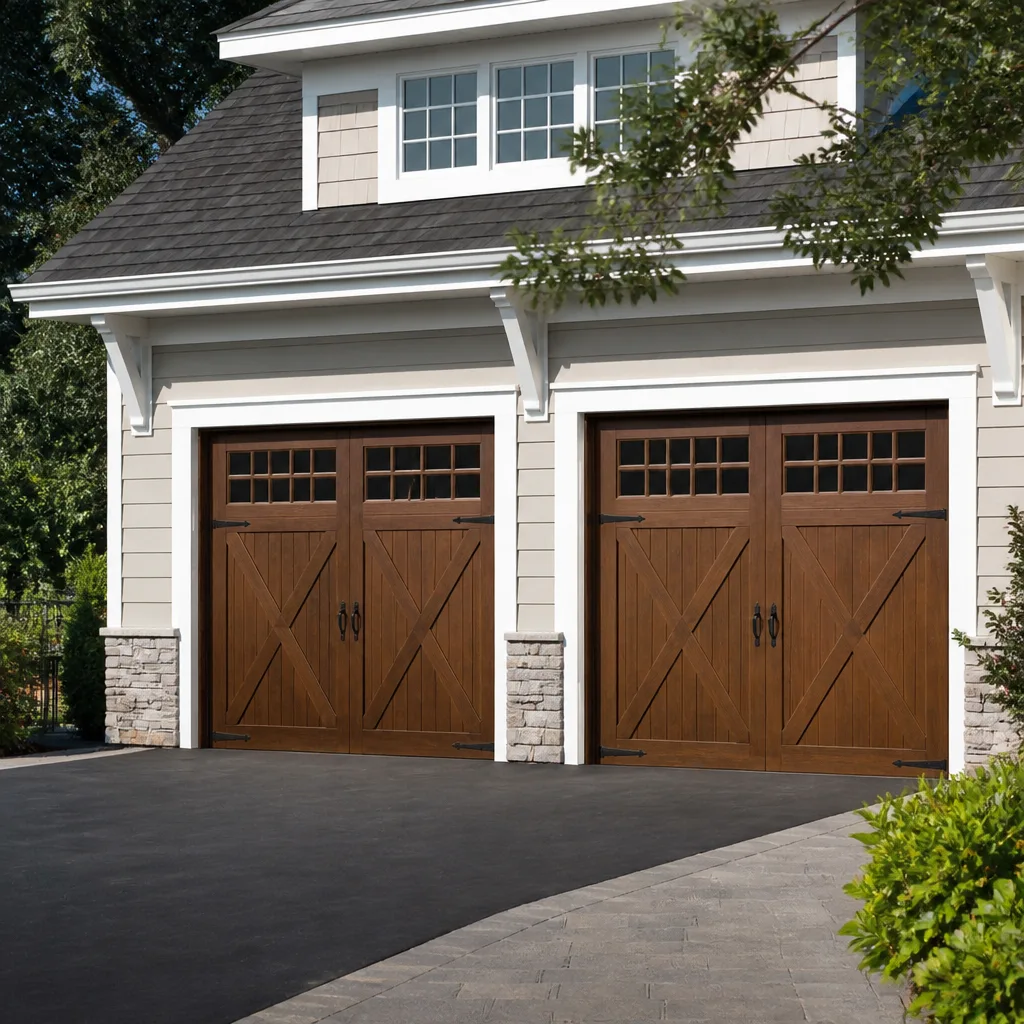 Carriage house
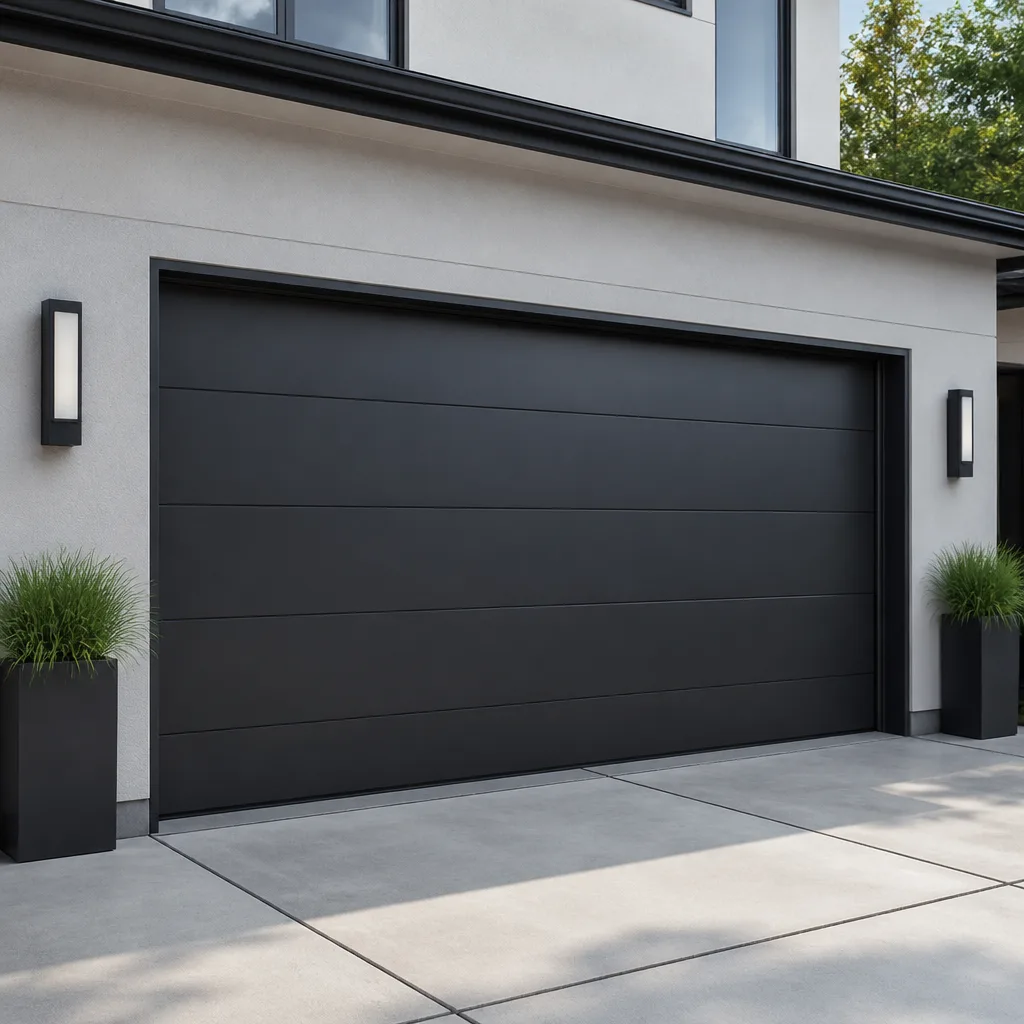 Modern flush
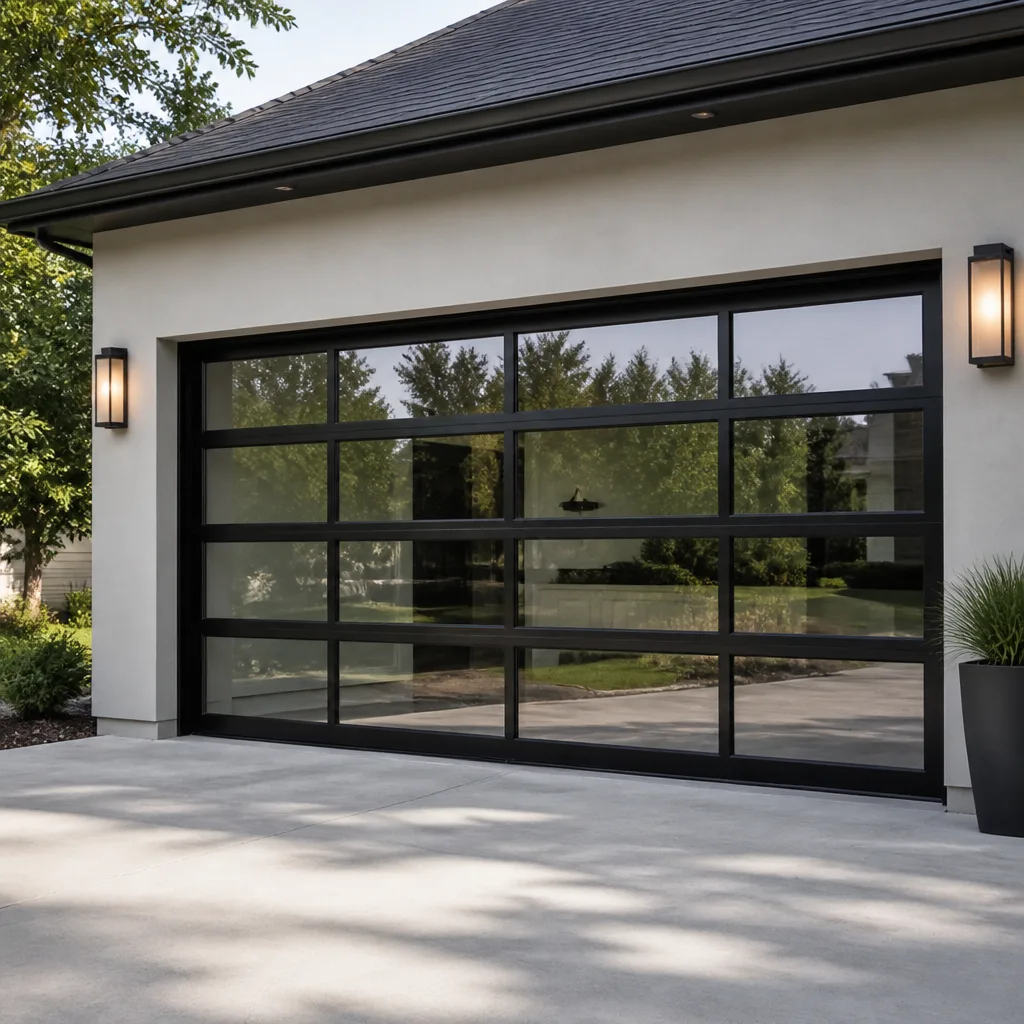 Full-view glass
 LiftMaster openers
 Chamberlain openers
Full 25-point door and opener safety check with every visit - springs, cables, rollers, tracks, and your LiftMaster or Chamberlain opener included
You get a price before we start. It does not change when the pro arrives.
Get your free estimateDIY vs Professional Garage Door: The Broken Arrow Homeowner’s Decision Guide
Most garage door advice splits into two useless camps: “never touch it, call a pro” and “you can fix anything with a YouTube video.” Both are wrong. The real question isn’t whether you’re handy enough. It’s whether the specific task in front of you has a failure mode you can recover from. A misaligned safety sensor costs you five minutes and a screwdriver. A torsion spring that lets go under load can put you in the emergency room. This guide draws that line precisely, task by task, so Broken Arrow homeowners know exactly what’s safe to handle and what genuinely isn’t.
Quick Answer
Some garage door work is genuinely homeowner-safe and some is genuinely dangerous, and the difference is whether a mistake fails quietly or fails violently. Lubrication, safety-sensor alignment, track wiping, and opener remote or travel-limit programming are all reasonable DIY tasks. Torsion spring replacement, cable replacement, and bottom-bracket work are professional-only because the stored energy involved can cause severe injury. For a Broken Arrow homeowner, the smart move is to handle the maintenance and call a professional for anything involving springs, cables, or structural anchoring.
Styles & brands we work with
- Raised-panel steel
- Carriage house
- Modern flush
- Full-view glass
- LiftMaster openers
- Chamberlain openers
Table of Contents
- Sorting the Jobs: Three Categories That Matter
- Homeowner-Safe Tasks and Why They’re Safe
- Homeowner-Capable With the Right Tools
- Professional-Only: Springs, Cables, and Brackets
- Oklahoma Wind Load and Why DIY Installation Is Different Here
- What Voids a Clopay, Amarr, or Wayne Dalton Warranty
- The True Cost of DIY vs Professional
- Why Brand Knowledge Changes the Repair Equation
Sorting the Jobs: Three Categories That Matter
Every garage door task falls into one of three buckets, and the bucket is determined by the physics of the component, not by how confident you feel. A torsion spring stores enormous potential energy. A safety sensor stores none. That’s the whole distinction, and it’s the one that should drive your decision in Broken Arrow.
Here’s how we sort them in our own work:
- Homeowner-safe: tasks where a mistake produces a door that doesn’t work, a sensor that won’t trip, or a noisy door. Nothing worse. You can undo the mistake or call someone to fix it.
- Homeowner-capable with the right tools: tasks where a mistake is recoverable but the tools themselves are the safety barrier. Skipping the correct tool turns a manageable job into a dangerous one.
- Professional-only: tasks where a mistake can release stored energy, drop a door, or compromise the structural anchoring of a 150- to 300-pound assembly above your head.
The failure-mode framing matters because it’s the honest one. Telling a Broken Arrow homeowner “you shouldn’t touch your door” is condescending and it’s also wrong. Telling them “watch a video and go” is irresponsible. The task-by-task breakdown below is what we’d tell a neighbor who asked us over the fence.
Homeowner-Safe Tasks and Why They’re Safe
These tasks involve no stored spring tension, no overhead load release, and no structural anchoring. If you get them wrong, the door stops working or the opener loses its programming. You fix that by redoing the step or calling for help. That’s the whole risk profile.
- Lubricating hinges, rollers, and tracks. Use a garage-door-specific lubricant, not WD-40, and not motor oil. Apply to hinge pivots, roller stems, and the torsion bar bearing plates. Never spray the tracks themselves with lubricant; tracks should stay clean and dry so the rollers roll instead of slide.
- Aligning or cleaning safety sensors. The two sensors near the floor should face each other, be free of cobwebs and dust, and have steady indicator lights. Wipe the lenses, nudge the brackets back into alignment, tighten the wing nuts. That’s it.
- Wiping and inspecting tracks. A damp rag and a visual check for dents or debris. Do not bend tracks back into shape; misaligned track is a professional call because a door that jumps track can bind and drop.
- Programming remotes and keypads. Every opener brand has a learn button, and every brand uses a slightly different sequence. Your garage door opener repair page walks through the common sequences by brand, which is faster than guessing at a LiftMaster or Chamberlain pairing routine.
- Adjusting opener travel limits and force settings. This is the electronic brain of the opener, not the mechanical door. The manual spells out the sequence, and you can re-do it if you overshoot.
- Visual inspection of springs, cables, and rollers. Look. Don’t touch. A broken torsion spring shows as a visible gap in the coil. A frayed cable shows as broken strands near the drum. Note what you see, then call.
None of these tasks require you to defeat gravity or stored mechanical energy. That’s why they’re safe. The Broken Arrow homeowner who handles the maintenance layer saves money and keeps the door running quietly between professional visits.
Homeowner-Capable With the Right Tools
This category is where DIY goes wrong most often, because the tools aren’t optional and the substitutes people reach for are exactly what creates the risk. These tasks are technically within reach if you own the correct gear and understand what the gear is for. If you don’t, own that and call.
The tools that matter and why substitutes are dangerous
- Winding bars. These are the only tool that should touch a torsion spring. They’re specifically sized to slot into the winding cone and specifically forged to hold under load. A screwdriver, a length of rebar, or a socket extension can slip out under tension and strike you.
- C-clamps for securing the door. Before any work under tension, the door is clamped to the vertical track so it can’t move. A pair of locking pliers is not the same thing; clamps stay put under load.
- Garage-door-specific lubricant. Silicone or lithium grease formulated for door hardware. General-purpose lubricants attract grit and gum up the rollers.
- A proper stepladder, not a chair. Obvious, and yet the most common injury on a homeowner repair is a fall, not the door.
Tasks that fit here
- Replacing a roller or two. Doable with the door fully open and clamped, with the correct replacement roller in hand. Some rollers are riveted and require cutting; that pushes the task toward a professional.
- Replacing a hinge. The bottom hinge and the center hinges are generally accessible. The bottom bracket at the very bottom corner is not; that’s the professional category below.
- Replacing a weather seal or bottom rubber. Straightforward once you know which profile your door uses, which varies by brand. A Clopay door and a Wayne Dalton door take different seals.
Notice what’s not on the list: anything that requires you to unwind or re-wind a torsion spring. Even with winding bars, a homeowner with no prior experience faces a real risk with a component that stores enough energy to break bones. We’ve worked on Broken Arrow doors where a previous occupant tried and left the spring partially wound and pinned with a screwdriver. Do not be that person.
Professional-Only: Springs, Cables, and Brackets
This is the category where we stop being polite about it. Every task below involves stored energy or overhead load that can be released in an instant by a wrong move. No YouTube video, no amount of confidence, and no shortcut tool changes that.
- Torsion spring replacement. The torsion spring above the door is wound to counterbalance the weight of the door. If it releases while you’re in its path, the resulting injury can be serious. Removal and installation require winding bars, correct winding counts, and knowledge of the door’s weight and drum radius.
- Extension spring replacement. On the sides of the door. Less stored energy than torsion, still dangerous. Extension springs also need a safety cable through the center as a containment measure, and many older doors don’t have one.
- Cable replacement. The cables are under the same tension as the springs and are attached to drums on the torsion bar. A cable that snaps free can whip. Cable replacement should only happen with the springs de-tensioned, which puts it squarely in the professional category.
- Bottom bracket work. The bottom bracket carries the cable at the bottom corner of the door. It is under continuous tension. Do not loosen it to “check” it. Ever.
- Track replacement or reshaping. A bent track can cause a door to bind and fall. Straightening is not a thing; the track is replaced or properly realigned by someone who can judge whether the door is running true.
- Panel replacement. A damaged panel replacement requires de-tensioning the springs, releasing the door from the opener, and rebalancing. It’s not a bolt-on job.
A trained technician has the tools, has the training, and has worked on hundreds of doors. If any of these components are broken or suspect on your Broken Arrow home, that’s the call. Our garage door repair service covers all of them, and the quote is set before anything gets touched.
Oklahoma Wind Load and Why DIY Installation Is Different Here
Oklahoma sits in one of the more active wind zones in the country. High-wind events in Broken Arrow are a fact of life, and a garage door is the largest moving opening in the house. That combination makes installation different here than it would be in a calm climate.
A garage door installed correctly is anchored to the framing at every hinge and bracket point, with the jamb brackets lagged into structural wood rather than drywall or trim, and the vertical and horizontal tracks shimmed and plumbed per the manufacturer’s spec. A door installed with the “close enough” framing we sometimes see from a previous owner or a cheap install can flex in a strong wind. When it flexes, panels can buckle, the door can jump track, and the door becomes a weak point in the building envelope during a storm.
Local code for a garage door replacement in Broken Arrow generally requires a permit, and the specifics depend on the current adopted building code and your individual property. If you’re installing yourself, call the city’s building department before you buy anything. Ask them what the permit requires for your address, what inspections they run, and whether they need engineering documentation for the door in a high-wind area.
The liability point deserves its own line. A door that isn’t anchored to spec is a door that can fail during a storm, and if it damages property or injures someone, the responsibility lands on the person who installed it. On a Professional-only install, that liability sits with a licensed and insured installer. On a DIY install, it sits with you. That’s not a scare tactic. It’s how homeowner liability actually works, and it’s why we push most Broken Arrow homeowners toward a professional install even when they’re otherwise capable DIYers.
What Voids a Clopay, Amarr, or Wayne Dalton Warranty
Warranties on garage doors and openers are more permissive and more specific than most homeowners assume. Manufacturer coverage typically distinguishes between maintenance performed by the owner and repairs performed improperly, and the two categories aren’t the same thing. Do the right maintenance and your warranty stays intact. Do the wrong repair and you can lose coverage on the affected part.
Usually covered by owner maintenance
- Cleaning and lubricating hardware per the owner’s manual
- Adjusting opener travel and force limits per the manual
- Keeping tracks clean of debris
- Aligning safety sensors
- Replacing weather seals
Often at risk of voiding coverage if not done correctly
- Spring replacement using non-OEM or incorrect-rated springs. A spring that’s the wrong wire gauge or wound to the wrong tension for the door’s weight stresses the bearings, drums, and the door itself, and manufacturers commonly exclude damage caused by an improper repair.
- Modifying the door panels or hinges. Adding or removing hardware outside the spec is a common exclusion.
- Opening the opener housing. Opener warranties on LiftMaster, Chamberlain, Craftsman, Genie, and Raynor commonly exclude internal work done outside an authorized repair. That’s the mechanism behind why our garage door opener repair service treats opener internals as a specialty rather than a generic repair.
- Improper installation. A door installed outside the manufacturer’s install spec can lose warranty coverage on the door and potentially on the anchoring hardware.
The critical point for a Broken Arrow homeowner: if you’re the original purchaser of a Clopay, Amarr, or Wayne Dalton door, read the warranty document that came with it before you attempt a repair. It tells you exactly what’s covered and what isn’t. If you’re not sure, call the manufacturer’s warranty line with your door’s model number and ask. That call is free and it takes ten minutes. It can save you a warranty argument later.
The True Cost of DIY vs Professional
The naive cost comparison (“the part is $40, the pro wants $250”) is misleading and it’s the reason DIY repair attempts so often end in a callback visit anyway. The honest comparison adds tool acquisition, time, and the probability of a second visit. Here’s how we’d tally it.
What actually goes into a DIY tally
- Part cost. A replacement spring, roller set, hinge, or sensor.
- Tool acquisition. Winding bars, clamps, lubricant, proper ladder. If you don’t already own them, that’s a real line item and it typically blows past the part cost for anything involving a spring.
- Your time. An honest estimate is two to three times what you think, especially on a first attempt.
- The probability of a callback. This is the number most homeowners underestimate. Some fraction of DIY attempts end with a service call anyway, and that service call is priced like any repair, not like a “come back and fix my mistake” visit. The homeowner has paid twice.
- The warranty risk. If the work isn’t done to spec, there’s a chance you eat a warranty exclusion later.
What a professional estimate actually buys
- The correct part for your specific brand and model
- The right tools, safely deployed
- An upfront written price, agreed before any work starts
- Insured work, so a mistake lands on the company, not on you
- No callback, because the job is done correctly the first time
For a Broken Arrow homeowner, our pricing is per job by written estimate. We’d rather quote it once than quote it twice because a DIY attempt has to be undone. That’s the honest version of the cost math, and for any spring or cable job, the pro side of the ledger wins on the true total nearly every time. If you want a number, call and we’ll tell you what your specific repair is likely to run.
Why Brand Knowledge Changes the Repair Equation
Ask any technician who’s worked across manufacturers and they’ll tell you the diagnosis isn’t generic. A LiftMaster opener with a worn drive gear is a different diagnosis than a Genie opener that’s lost its limit programming. A Wayne Dalton door with a TorqueMaster spring system takes a different approach than a Clopay door with a standard torsion setup. The brand isn’t a sticker on the door; it’s the system.
We work on eight brands across the residential market: LiftMaster, Chamberlain, Genie, Clopay, Amarr, Wayne Dalton, Craftsman, and Raynor. Most of the homes we see in Broken Arrow and the surrounding neighborhoods run one of these systems, so diagnosis starts from familiarity with the actual hardware rather than from a generic look at the door.
What that means for a DIY decision: if you don’t know whether your opener uses a chain, belt, or screw drive, or whether your door uses torsion or extension springs, you don’t yet know which task category the job is in. Look at the door, look at the opener housing for the model number, and look at the spring above the door. That inspection is free. What you do next depends on whether the answer points to the homeowner-safe column or the professional-only column.
One call covers all three service categories at Morningstar Garage Door Repair: repair, opener service, and installation. If you’re in Broken Arrow, you’re not going to be sent to a different contractor when the problem turns out to be the opener instead of the door.
Common Mistakes to Avoid
- Reaching for a screwdriver to hold a torsion spring. The most dangerous shortcut in the trade. Even experienced technicians use proper winding bars; a homeowner with a screwdriver is one slip away from an injury. If the spring is broken, it’s a professional call.
- Lubricating the tracks. The tracks should be clean and dry. Lubricant makes the rollers slide instead of roll, which causes uneven wear and noisy operation. Lube the hinges, roller stems, and bearing plates, not the tracks.
- Using WD-40 as a garage door lubricant. It’s a light penetrating oil and it attracts dirt. Use a garage-door-specific silicone or lithium lubricant per the manufacturer’s spec, especially on the roller stems and hinge pivots.
- Ignoring a slow-closing or bouncy door. A door that reverses on close or stops short on open is often a force-limit or travel-limit programming issue. On a LiftMaster or Chamberlain opener this is a manual sequence; on a Craftsman or Raynor system the sequence is slightly different. Wrong guess, wrong result, so read the manual or call.
- Installing a replacement door without a Broken Arrow permit. A garage door replacement in Broken Arrow typically requires a permit. Call the city’s building department before you buy the door, not after. A DIY install that skips the permit is a liability exposure during a storm.
- Assuming a warranty covers DIY repair. Clopay, Amarr, and Wayne Dalton warranty terms distinguish between owner maintenance and improper repair. A non-OEM replacement spring or a modified door panel can void coverage on the affected part.
- Buying the wrong replacement part. Springs are rated by wire gauge, length, and wind direction, and there are dozens of combinations. If you buy the wrong one, you’re out the part cost and you’re still calling for help, which means you paid twice.
See the difference
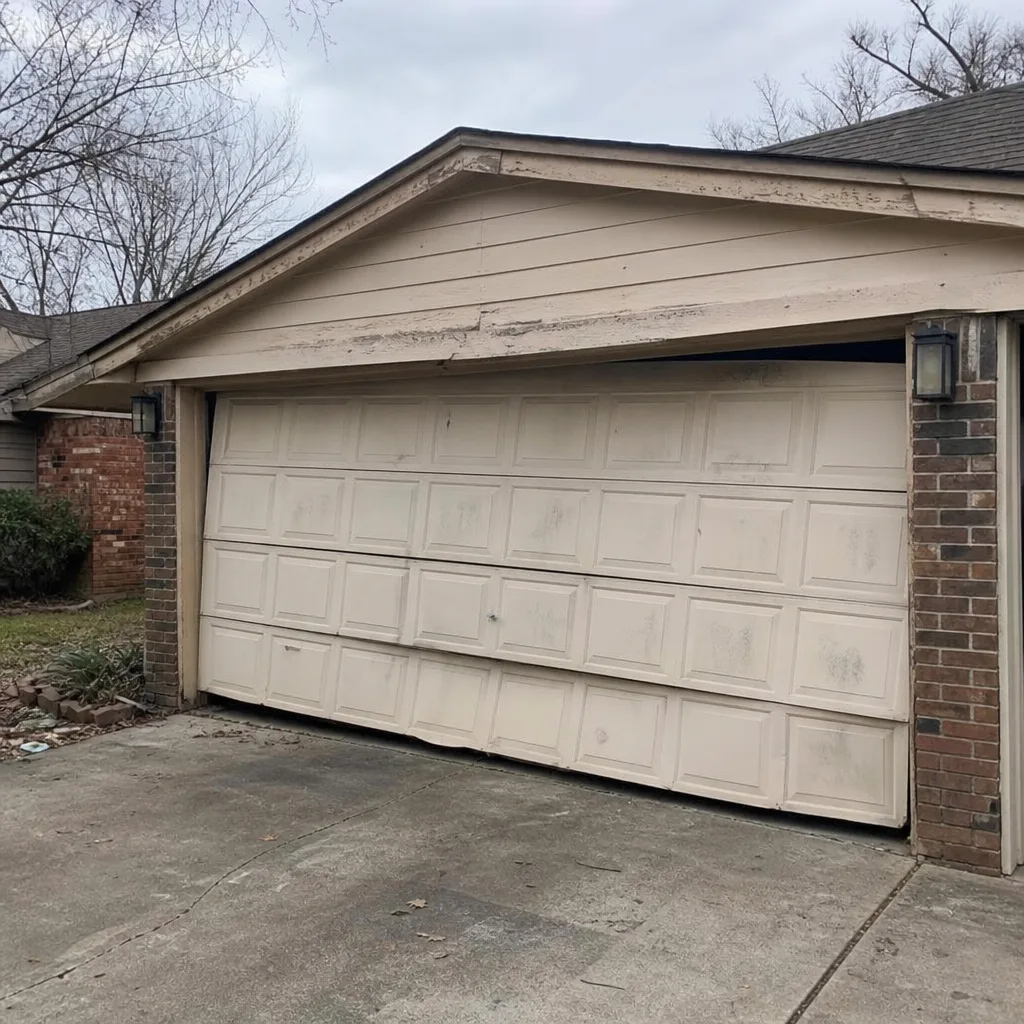 Before
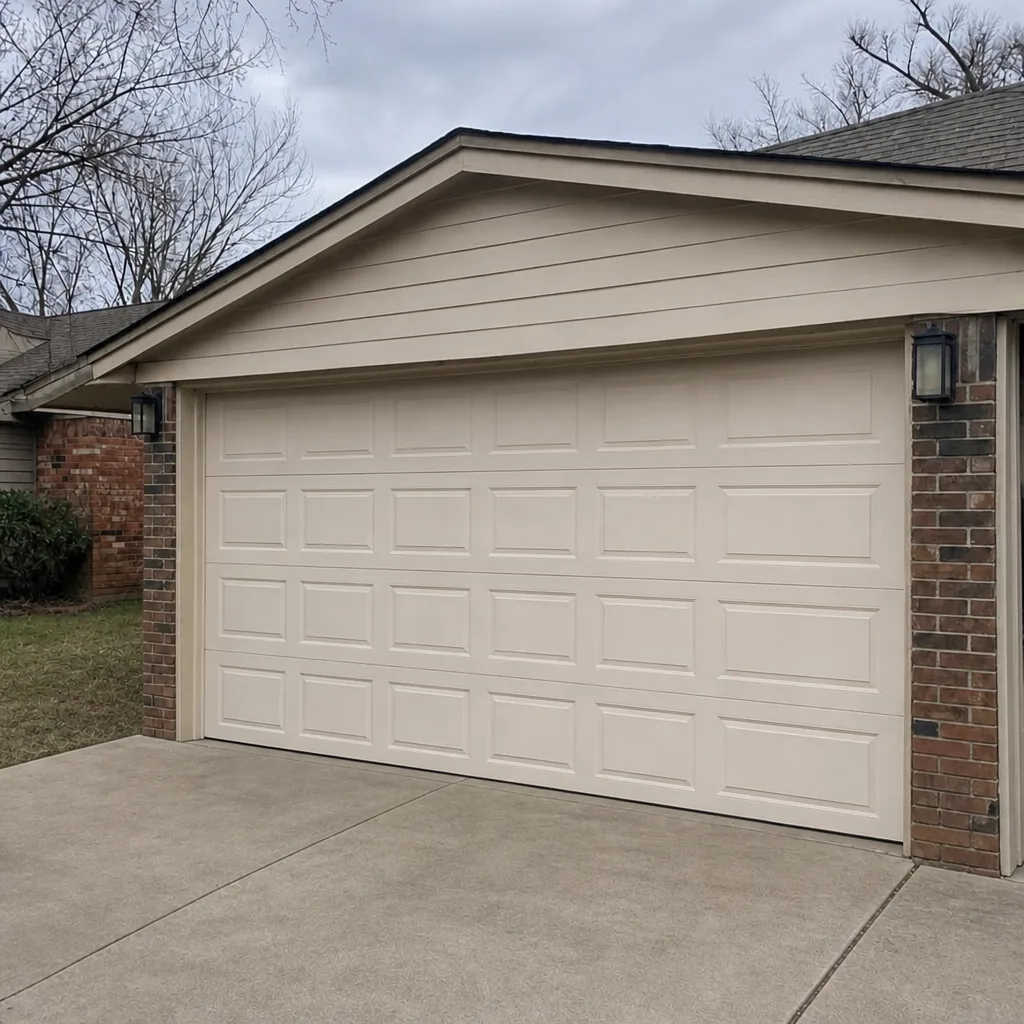 After
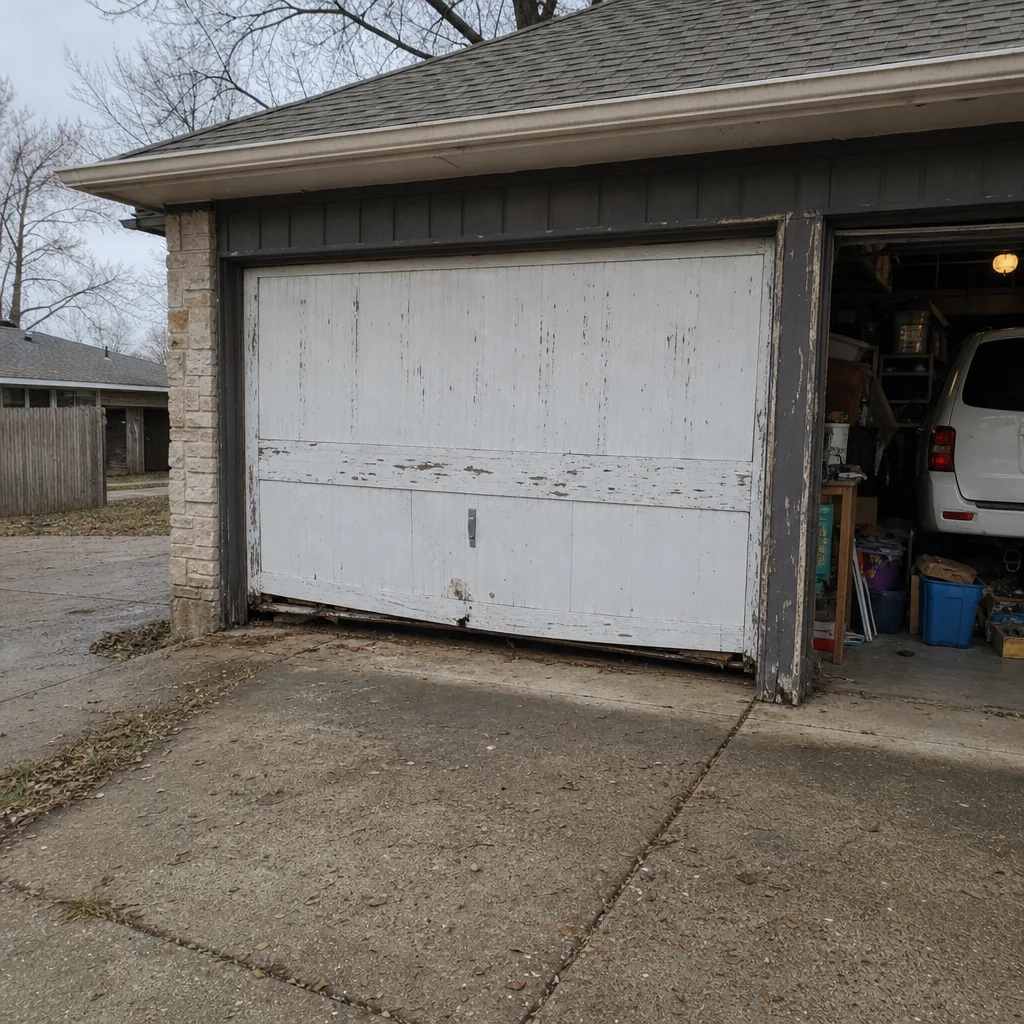 Before
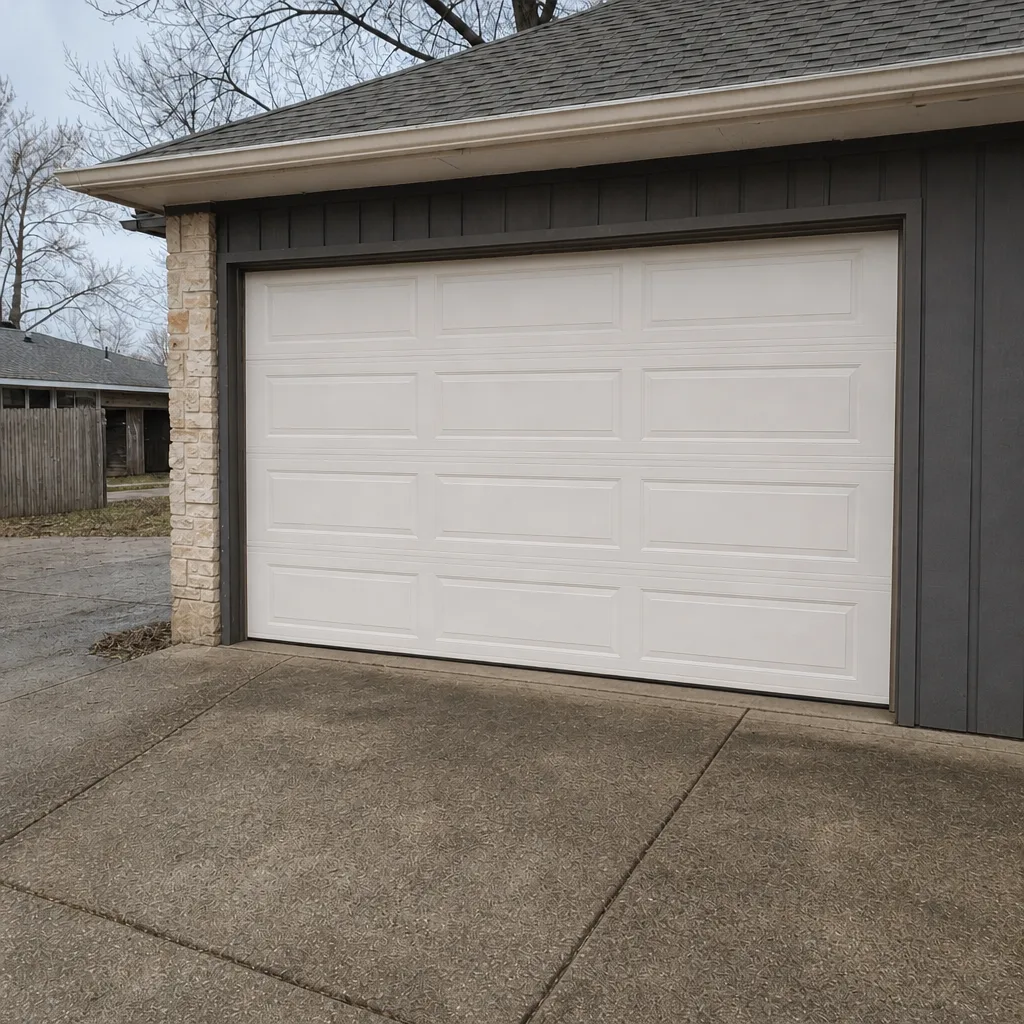 After
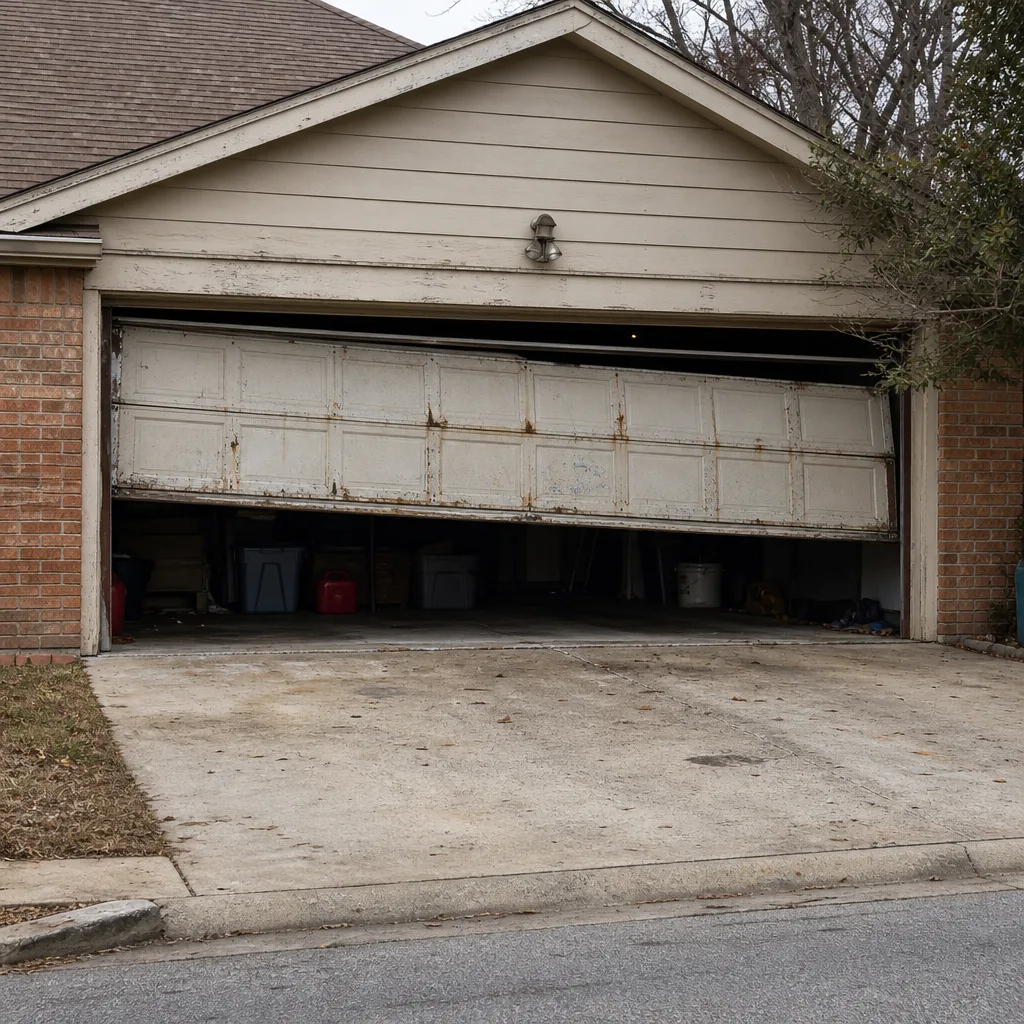 Before
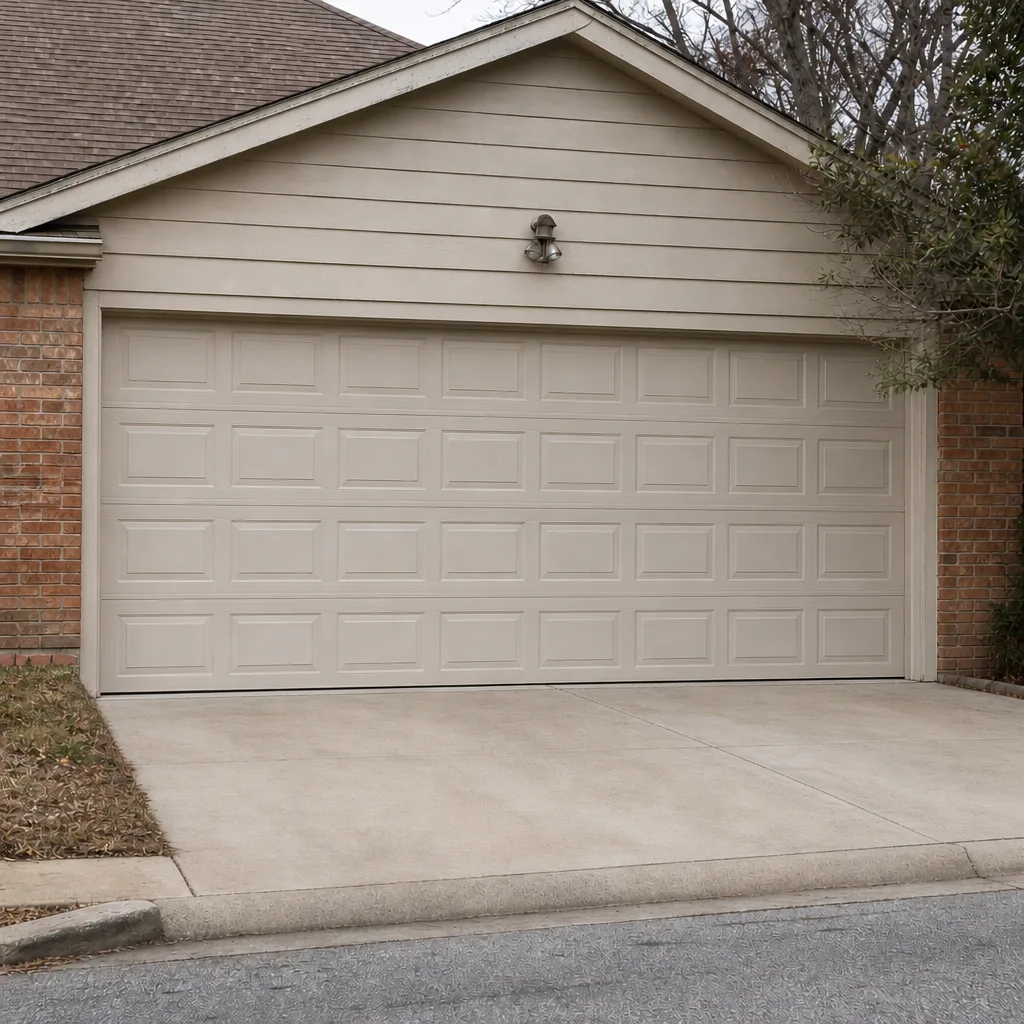 After
When to Call a Professional
Call a professional for anything involving a spring, cable, bottom bracket, track replacement, or structural anchoring. Those categories have failure modes where a mistake can cause injury or property damage, and no shortcut is worth that. Call a professional for a door that’s misaligned, a panel that’s buckled, an opener that keeps losing its programming, or a door that reverses unpredictably on close. And call a professional for any install or replacement in Broken Arrow, where the permit and wind-load anchoring are part of the job. Our technicians have up to 13 years of experience, and Morningstar Garage Door Repair offers free estimates in Broken Arrow. Call (844) 320-3275. We answer 24/7, with fast dispatch from 7am to 7pm, Sunday through Friday.
Frequently Asked Questions
No. Torsion spring replacement should be handled by a trained technician because the spring stores enough potential energy to cause serious injury if it’s released improperly. The winding bars, the winding count, and the correct spring rating all have to be right, and a mistake is not recoverable. If the spring above the door is showing a visible gap or the door won’t lift, call (844) 320-3275 for a free estimate. A mismatch between spring rating and door weight is exactly the kind of error that damages drums and bearings even when the spring doesn’t let go.
Yes. Lubricating hinges, roller stems, and bearing plates is a homeowner-safe task. Use a garage-door-specific silicone or lithium lubricant and apply it to the moving metal contact points, not the tracks. The tracks should stay clean and dry. Wiping them down with a damp rag is fine; spraying them with lubricant is not.
A door that reverses before closing usually has a safety sensor problem or a force-limit issue. Start by checking that the two sensors near the floor have steady indicator lights, are facing each other, and are free of dust and cobwebs. If that’s not it, the force limit may need adjustment, which is an opener programming task specific to your brand. Our garage door opener repair page covers the common causes by system, or call for a diagnostic. A door that reverses unpredictably is a call-us situation rather than a keep-guessing situation.
Installation outside the manufacturer’s specification can jeopardize warranty coverage on the door and the anchoring hardware, and improper repair is a common exclusion. Whether a specific installation voids your warranty depends on the brand and the model. Read the warranty that came with the Clopay, Amarr, or Wayne Dalton door, or call the manufacturer with the model number. Broken Arrow’s permit requirements for a garage door replacement also apply to a DIY install, so call the city’s building department before you start.
Our pricing is per job by written estimate, set before any work starts, so you know the number before we touch the door. Call (844) 320-3275 for an exact quote. Estimates are free, and the written price is what you pay. That’s the honest answer, and it beats a phone guess that doesn’t reflect your door’s actual system, weight, or condition.
No, panel replacement belongs in the professional-only category. The springs have to be de-tensioned, the door released from the opener, and the door rebalanced after the new panel goes in. Attempting a panel swap without de-tensioning the springs puts you in the path of stored energy you can’t see. It’s a professional job, and it’s one we handle across Clopay, Amarr, Wayne Dalton, and Raynor door systems.
The Bottom Line
The DIY versus professional question for a garage door isn’t a debate about self-reliance. It’s a question about failure modes, and once you frame it that way, the line is clear. Lubrication, sensor alignment, track wiping, remote programming, and weather-seal replacement are yours to handle. Springs, cables, bottom brackets, track replacement, and structural anchoring are professional-only, and no amount of confidence changes that. In Broken Arrow, wind load adds a liability dimension to installation that DIY rarely accounts for, and warranty documents on Clopay, Amarr, and Wayne Dalton doors have specific rules about what voids coverage. When you add up tools, time, and the probability of a callback, the professional route usually costs less than the DIY attempt once the true total is on the page.
If you’re in Broken Arrow and you’ve got a broken spring, a door that’s out of alignment, an opener that’s stopped responding, or a door you’re ready to replace, call Morningstar Garage Door Repair at (844) 320-3275 for a free estimate. We work on LiftMaster, Chamberlain, Genie, Clopay, Amarr, Wayne Dalton, Craftsman, and Raynor systems, and one call covers repair, opener service, and installation. Our technicians have up to 13 years of experience, and the price you’re quoted is the price you pay. We answer 24/7, with fast dispatch from 7am to 7pm, Sunday through Friday. Visit Morningstar Garage Door Repair to see the full set of services.
Written by the team at Morningstar Garage Door Repair.