
Last updated November 15, 2026
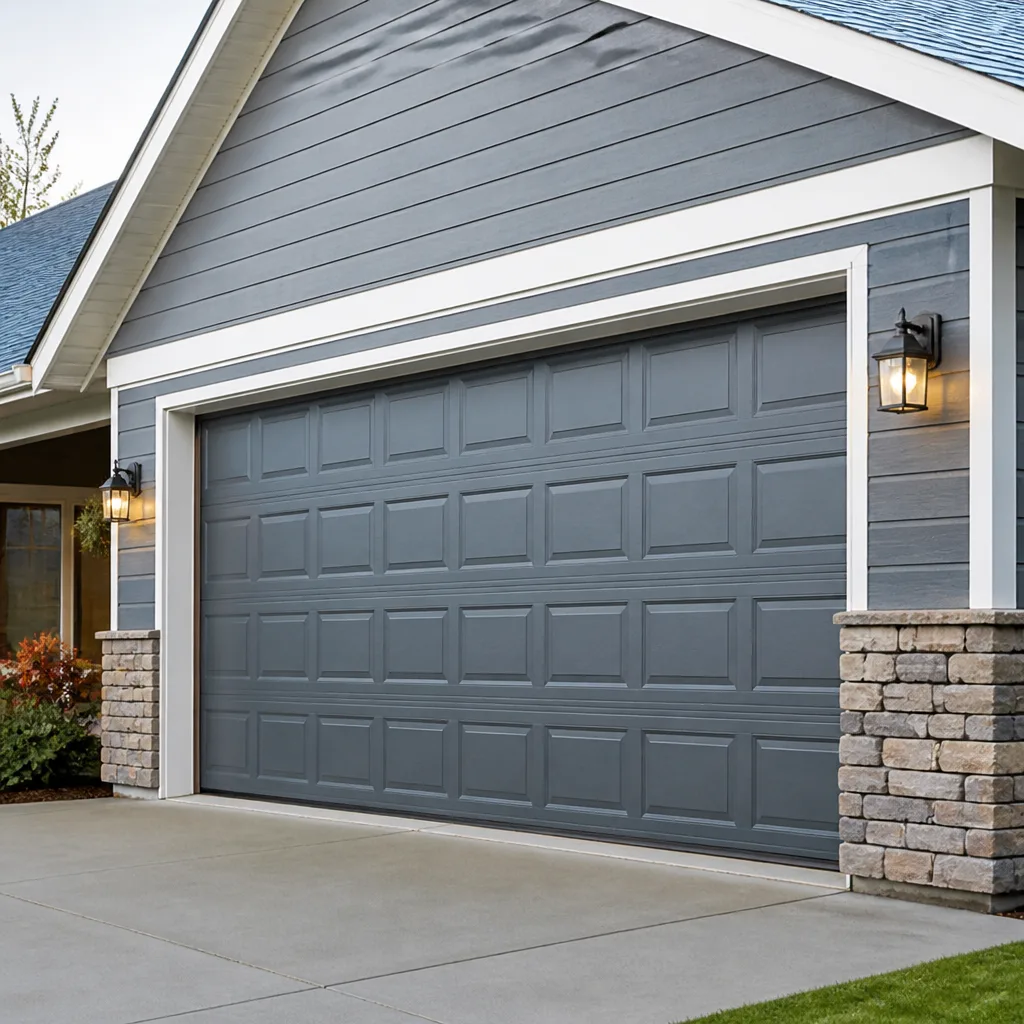 Raised-panel steel
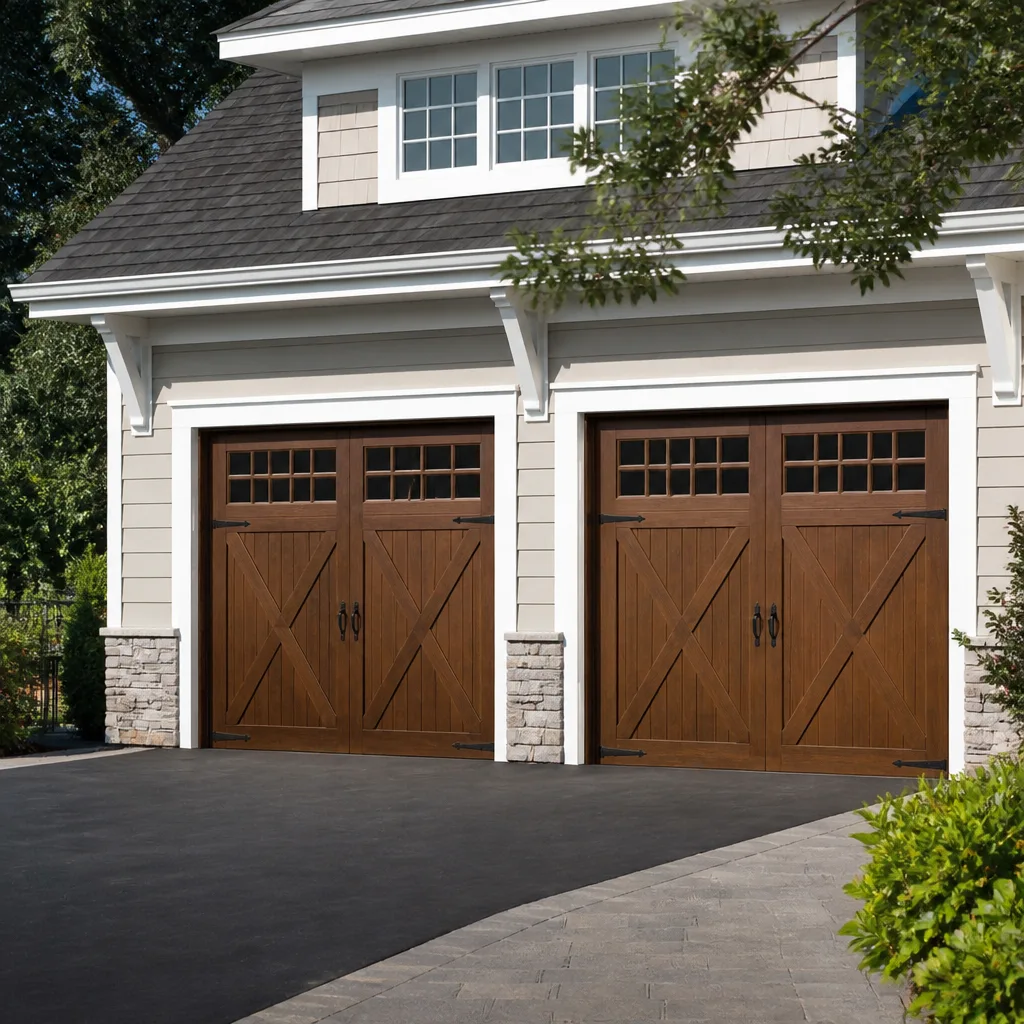 Carriage house
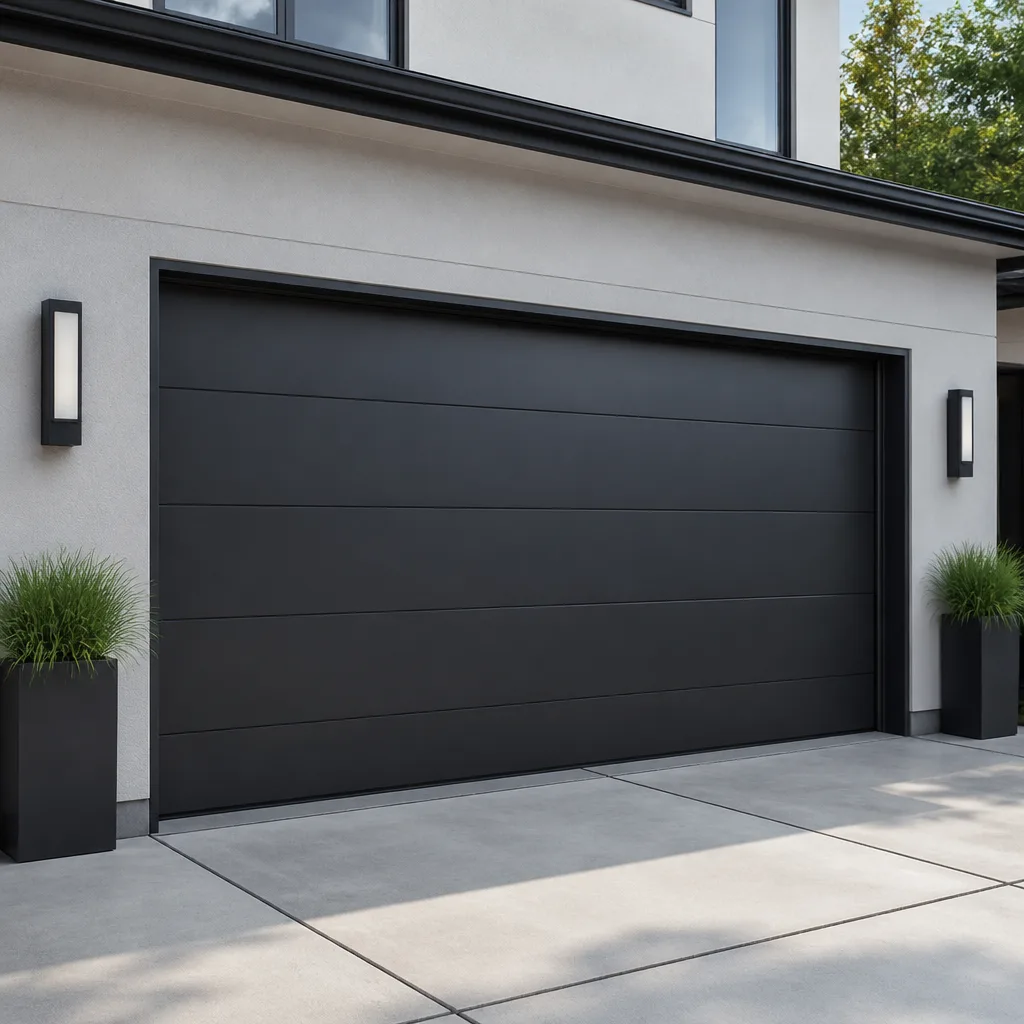 Modern flush
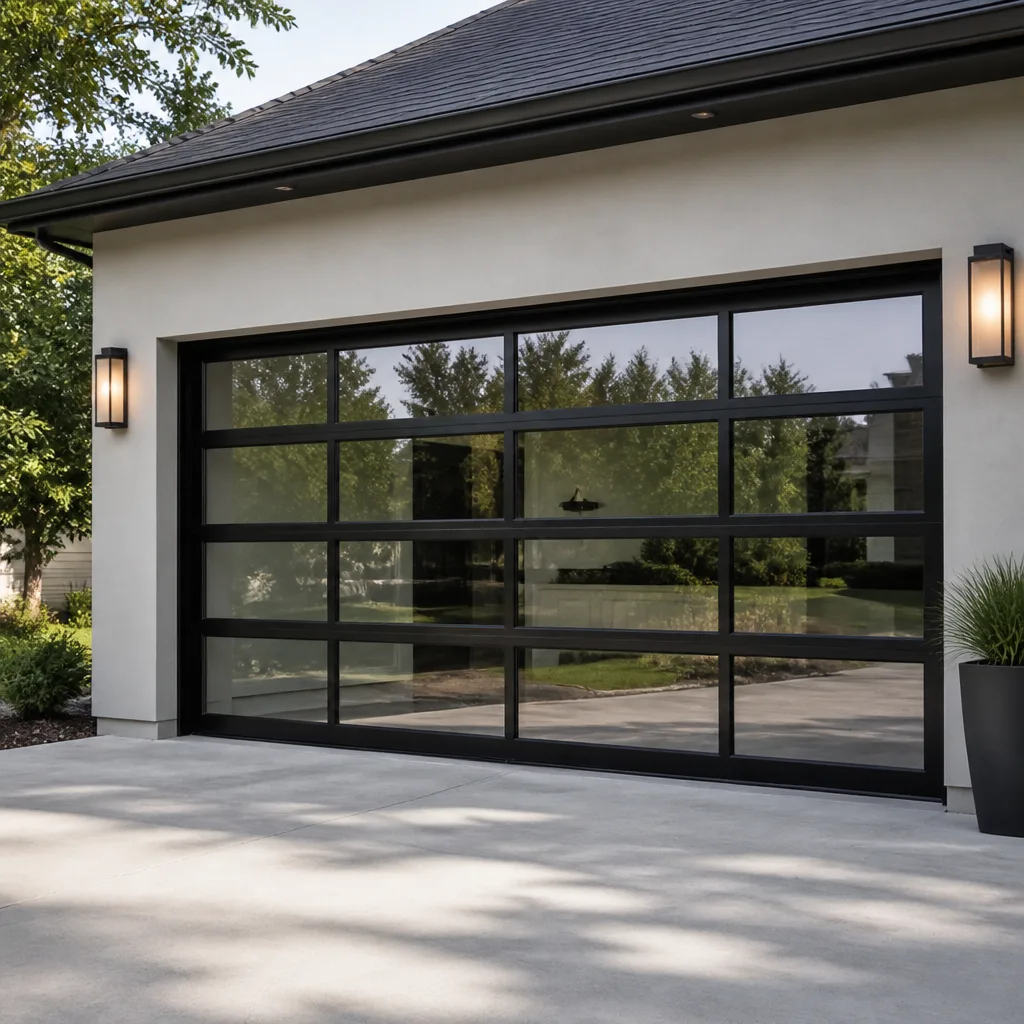 Full-view glass
 LiftMaster openers
 Chamberlain openers
Full 25-point door and opener safety check with every visit - springs, cables, rollers, tracks, and your LiftMaster or Chamberlain opener included
You get a price before we start. It does not change when the pro arrives.
Get your free estimateGarage Door Repair Troubleshooting in Broken Arrow: Common Problems and How to Fix Them
A door that reverses before it reaches the floor and a door that won’t move at all can look like the same failure from the driveway, but they’re two different problems with two different fixes. One is usually a sensor or limit switch issue; the other is often a spring, cable, or opener drive failure. Treat them as the same thing and you either replace a part you didn’t need or ignore the part that actually broke. This guide sorts garage door trouble into four mechanical categories so you can tell, before you touch anything, whether you’re looking at a quick adjustment or a job that belongs to a technician. We’ll walk through what each category sounds and looks like on a Broken Arrow door.
Quick Answer
Most garage door problems in Broken Arrow fall into one of four groups: torsion spring or cable failure, opener trouble, track and roller wear, or sensor and limit switch faults. Springs and cables are never a DIY repair and need a trained technician. Sensors, limit switches, and lubrication you can often handle yourself. Test whether the problem is mechanical or electrical by pulling the manual release cord and lifting the door by hand – if it’s heavy or binds, the door is the problem, not the opener.
Styles & brands we work with
- Raised-panel steel
- Carriage house
- Modern flush
- Full-view glass
- LiftMaster openers
- Chamberlain openers
Table of Contents
- The Four Categories Every Garage Door Problem Falls Into
- How to Tell If It’s the Door or the Opener
- Spring and Cable Problems: Why These Are Never DIY
- Opener Faults and Brand-Specific Error Codes
- Track, Roller, and Hardware Issues
- Sensor and Limit Switch Adjustments You Can Make
- How Oklahoma Weather Affects Your Door
- When to Call a Professional
The Four Categories Every Garage Door Problem Falls Into
Every garage door fault traces back to one of four mechanical systems. Knowing which one you’re dealing with narrows the diagnosis fast and keeps you from guessing at the wrong part.
- Springs and cables. These carry the door’s weight. When they fail, the door gets heavy, hangs unevenly, or won’t lift. This category is always a professional repair.
- The opener. The motor, drive gear, belt, chain, or screw that raises the door. Opener faults show up as a motor that runs but doesn’t move the door, a door that reverses for no reason, or a remote that stops responding.
- Tracks and rollers. The guide rails and the wheels that ride in them. Wear here causes grinding, catching, and a door that drifts off-center.
- Sensors and limit switches. The safety eyes near the floor and the travel limits that tell the opener where to stop. These cause reversing doors, doors that won’t close fully, and doors that stop short on the way up.
In our experience, homeowners in Broken Arrow tend to assume the opener first, because it’s the part that makes noise. But opener faults are the least common of the four, and spring failures are the most common. A door that groans and struggles is almost always a weight problem, not a motor problem. Sorting your symptom into the right category before you call anyone saves you from paying for the wrong fix. And when the problem turns out to be the motorized side of the system, our garage door opener repair covers that diagnosis directly.
How to Tell If It’s the Door or the Opener
You can separate a mechanical problem from an electrical one in about two minutes using the manual release cord. It’s the step most troubleshooting guides skip, and it’s the single most useful test you can run.
- Close the door and disconnect the opener. Pull the manual release cord hanging from the opener carriage. This disengages the door from the motor so you’re testing the door alone.
- Lift the door by hand, halfway. A balanced door lifts with steady, moderate effort and stays where you leave it. If it’s very heavy, won’t budge, or slams down, the problem is mechanical – springs or cables.
- Let go at the halfway point. A properly balanced door holds its position. A door that drifts down on its own has lost spring tension.
- Check for binding. If the door feels like it’s catching or scraping as it moves, look at the tracks and rollers.
- Reconnect and test the opener alone. If the door lifted smoothly by hand but the opener still won’t move it, the fault is in the opener, its drive, or the sensors.
This one test splits the entire troubleshooting tree in half. If the door passes the hand test, you’re chasing an opener or sensor problem. If it fails, stop – don’t run the opener against a door it can’t lift. That strains the motor and can snap a weakened cable. In Broken Arrow, where doors run hard through hot summers and cold snaps, a door that fails the hand test is usually a spring that’s near the end of its cycle life. For anything on the mechanical side, our garage door repair team handles the diagnosis and the fix.
Spring and Cable Problems: Why These Are Never DIY
Torsion springs and the cables that run with them are under extreme tension at all times. They are the one part of a garage door system that homeowners should never adjust, loosen, or try to replace. A torsion spring holds enough stored energy to cause serious injury if it releases unexpectedly, and the winding process requires specific tools and training. This is a job for a trained technician, full stop.
Here’s what a failing spring or cable looks like, so you know what you’re seeing:
- A visible gap in the spring. A torsion spring that has broken shows a clear gap in the coil above the door. That door will feel extremely heavy by hand.
- A door that lifts a few inches and stops. The opener strains, the door rises slightly, then reverses. Classic broken-spring symptom.
- A door that hangs crooked. One cable has slackened or snapped, so one side lifts and the other doesn’t.
- A loud bang from the garage. A spring breaking makes a sharp report. If you heard it and the door no longer works, the spring is the likely cause.
- Frayed or kinked cables. Cables that look twisted, frayed, or off their drum need professional attention before they fail completely.
When a spring is replaced, it’s usually done as a matched pair, since both springs on a door have cycled the same number of times. A single spring carries the full load if its partner fails, so replacing one and leaving the other is a short-term fix at best. We work on spring and cable systems across Clopay, Amarr, and Wayne Dalton doors, among others, and we match the replacement to the door’s actual weight and hardware rather than grabbing a generic spring off a shelf. If your door fails the hand-lift test, that’s the point to stop and call.
Opener Faults and Brand-Specific Error Codes
Openers fail in predictable ways, and the diagnostic codes they flash mean different things depending on the brand. The same blinking light pattern on a LiftMaster and a Genie can point to two completely different faults, which is why brand familiarity matters more on openers than anywhere else on the door.
Common opener symptoms and what they usually mean:
- Motor runs but the door doesn’t move. Often a stripped drive gear, a broken belt, or a carriage that’s come loose from the rail.
- Door reverses right after starting to close. Usually the safety sensors, not the motor. See the sensor section below.
- Remote works intermittently. Dead battery, a mis-paired remote, or interference on the frequency. LiftMaster and Chamberlain units use similar logic boards but different pairing sequences.
- Opener hums but doesn’t move. A seized motor, a failed capacitor, or a door that’s too heavy for the opener to lift – which loops back to the spring test.
- Travel limits drifted. The door stops short on the way up or doesn’t fully close. This is often an adjustment, not a part failure.
Genie units tend to report faults through a specific count of LED blinks, while Craftsman and LiftMaster models often use a combination of the main light and a diagnostic LED. Raynor and Chamberlain systems have their own patterns. Without the manual for your exact model, a blinking pattern is easy to misread, and that’s how homeowners end up replacing a good circuit board. We keep the diagnostic references for all eight of the major opener brands we service – LiftMaster, Chamberlain, Genie, Clopay, Amarr, Wayne Dalton, Craftsman, and Raynor – so the diagnosis is based on the system you actually own, not a guess. If your opener is the problem, our team can sort it out as part of our Morningstar Garage Door Repair service lineup.
Track, Roller, and Hardware Issues
Track and roller problems are the most visible and the most fixable. They’re also the most often ignored, because a door with a slightly bent track still opens – until it doesn’t. Here’s what to look and listen for.
- Grinding or squealing. Dry or worn rollers. Nylon rollers wear smooth and quiet; steel rollers get noisy. Lubrication helps, but worn rollers need replacing.
- The door drifts to one side. A track out of plumb, or a roller that’s jumped the rail. Look along the track for a gap where a roller has popped out.
- A visible bend or dent in the track. Even a small kink causes the door to catch. Tracks can sometimes be straightened, but a badly bent track should be replaced.
- Loose hinges and brackets. Vibration loosens fasteners over time. A door that rattles and shakes is telling you something’s coming loose.
- A door that binds in one spot. Run the door by hand and feel for the spot where resistance increases. That’s where the track or roller issue is.
What you can safely do yourself: wipe down the tracks, lubricate the rollers and hinges with a garage-door lubricant, and tighten visibly loose bolts on the hinges. What you should leave alone: bending a track back into shape with force, replacing rollers on a door still under spring tension, and anything on the torsion bar. In Broken Arrow, the summer heat dries out lubricant faster than you’d expect, so tracks and rollers benefit from a seasonal check. A door that’s been grinding for months usually needs more than oil by the time it gets looked at.
Sensor and Limit Switch Adjustments You Can Make
Safety sensors and travel limits are the two adjustments a homeowner can usually handle. Both cause a door that reverses or won’t close, and both are worth checking before you assume a bigger failure.
Photo-eye sensors sit near the floor on each side of the door and stop it from closing on something in the way. If they’re misaligned, dirty, or blocked, the door reverses the moment it starts down.
- Look at the small LED on each sensor. A steady light on both means they’re aligned and working. A flickering or dark light means a problem.
- Wipe the sensor lenses with a soft cloth – dust and cobwebs block the beam.
- Check that nothing is in the door’s path, including a broom, a toy, or a sagging cable.
- If one sensor’s light is off, gently adjust it until both lights are steady. They need to point at each other.
- Test by closing the door and passing an object through the beam. The door should reverse.
Travel limits control how far the door opens and closes. If the door stops short or doesn’t close all the way, the limit settings have usually drifted. On most openers there are up and down adjustment screws or buttons on the motor housing – the manual for your model shows which is which. Adjust in small increments and test after each change. Limit adjustment is safe because you’re only changing where the opener stops. Sensor alignment is safe too. Anything involving the springs, cables, or the torsion bar is not. If a limit adjustment doesn’t hold or the door keeps drifting, that’s the point to bring in a technician.
How Oklahoma Weather Affects Your Door
Broken Arrow sees the full range of Oklahoma weather – hot, humid summers and cold snaps that drop fast in winter. That swing does real things to a garage door, and it explains a lot of the “my opener failed” calls that turn out to be something else entirely.
Metal expands in heat and contracts in cold. Torsion springs are steel, and their tension shifts with temperature. A door that worked fine in October can feel heavier and sluggish in a January cold snap, and a door that ran smooth in March can bind slightly in July heat as the tracks and panels expand. Neither of those is an opener failure, even though the opener is what the homeowner notices straining. The same is true of the tracks: a hot day can tighten a track that was fine in cooler weather, causing a roller to catch.
The practical takeaway for Broken Arrow homeowners is to check the door by hand when the seasons turn. If it lifts smoothly and holds position, the door is fine and any trouble is in the opener or sensors. If it’s suddenly heavy, the temperature swing has exposed a spring that’s losing tension. Lubricating rollers and hinges as the seasons change helps too, since heat dries out lubricant and cold makes it stiff. A door that only misbehaves in extreme heat or cold is telling you the mechanical side is marginal – which is worth knowing before it becomes a full failure. If you’re in Broken Arrow and your door only acts up in certain weather, that pattern is a useful clue for the technician.
See the difference
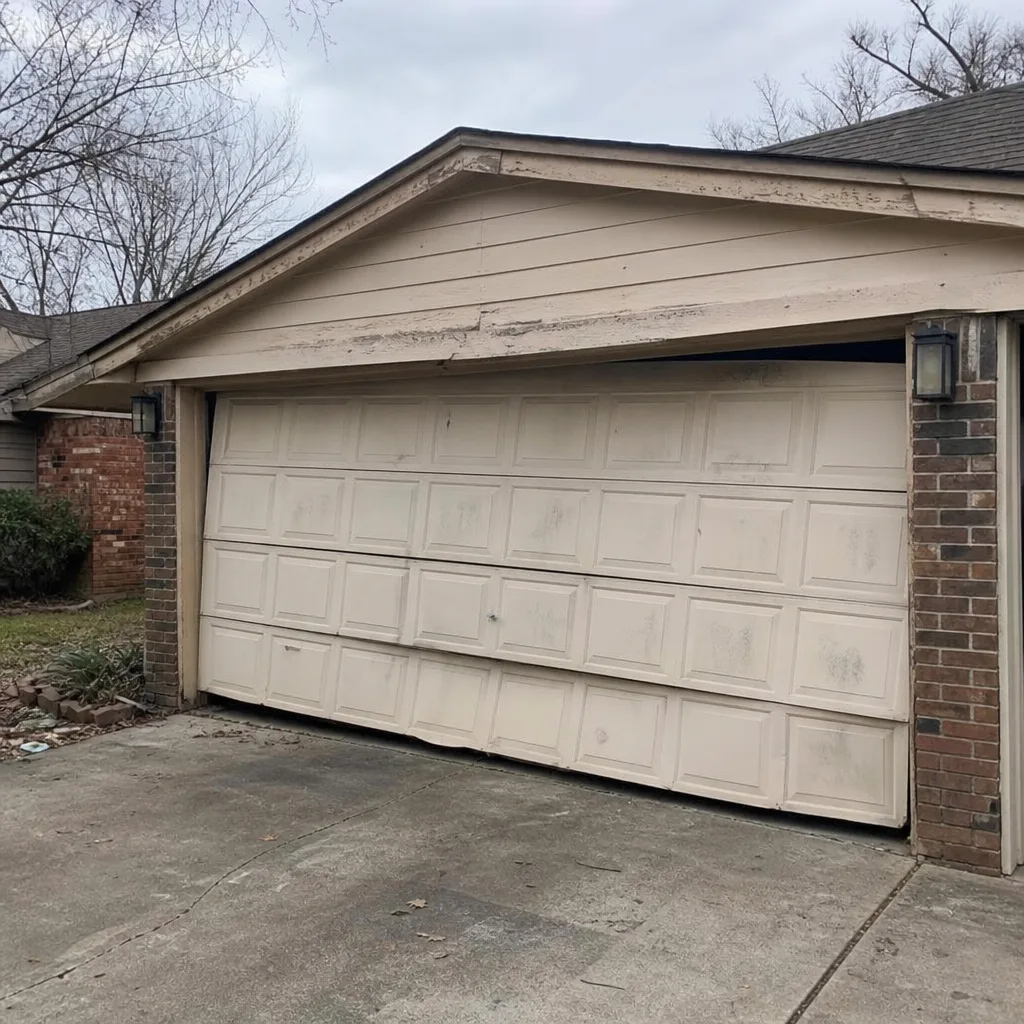 Before
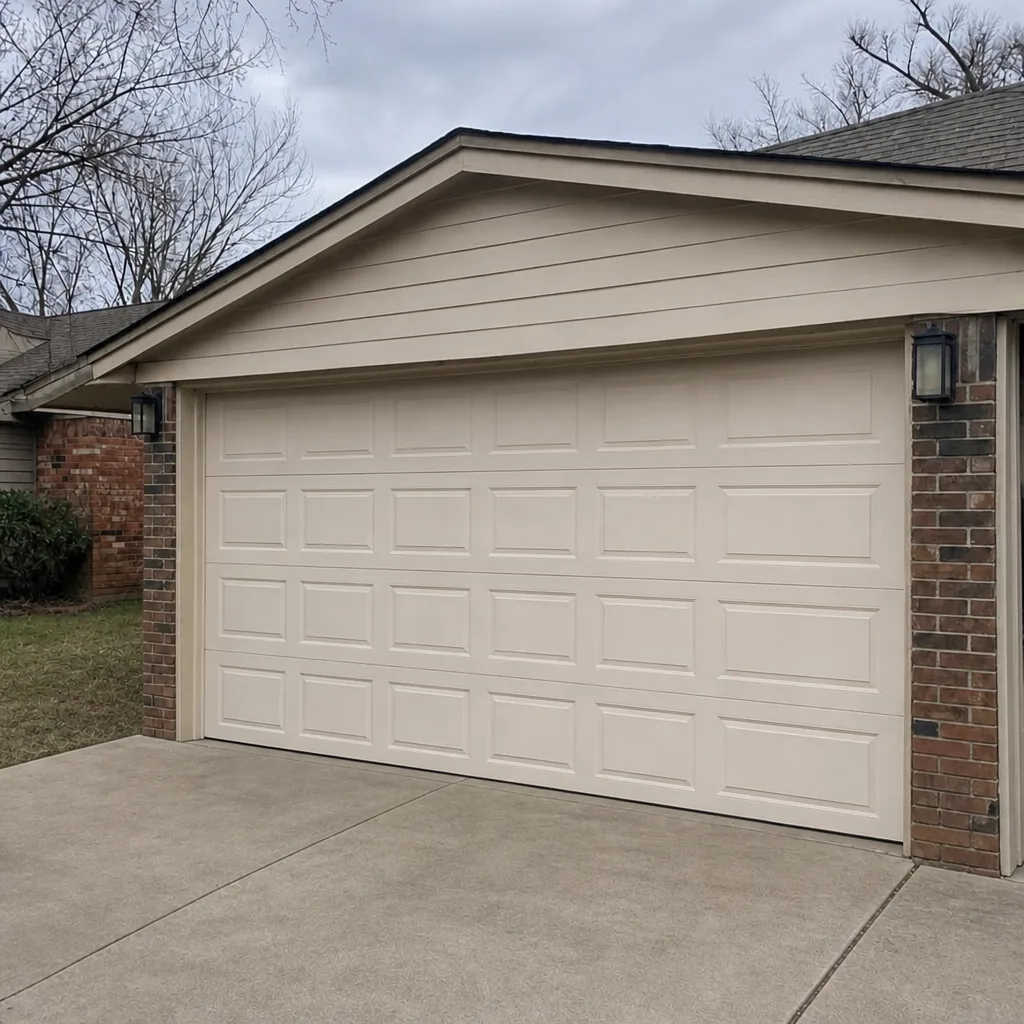 After
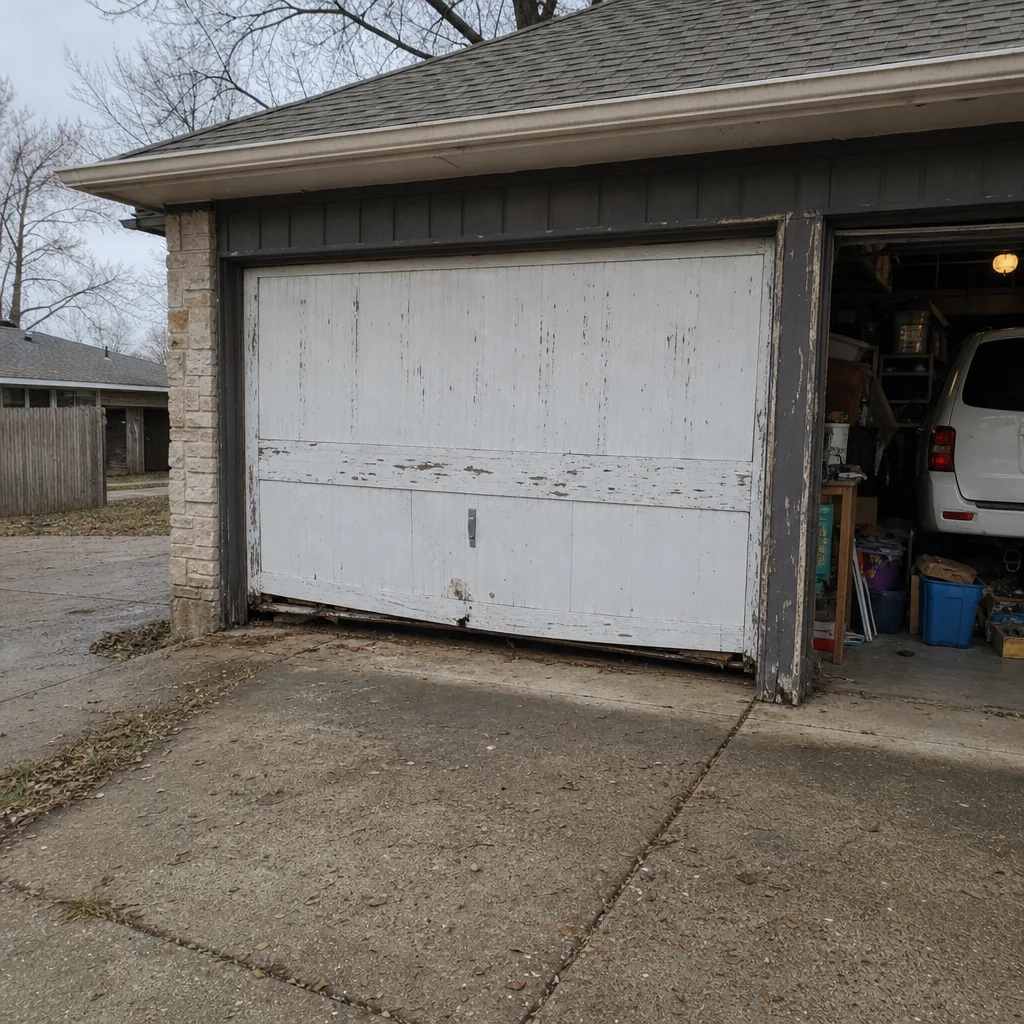 Before
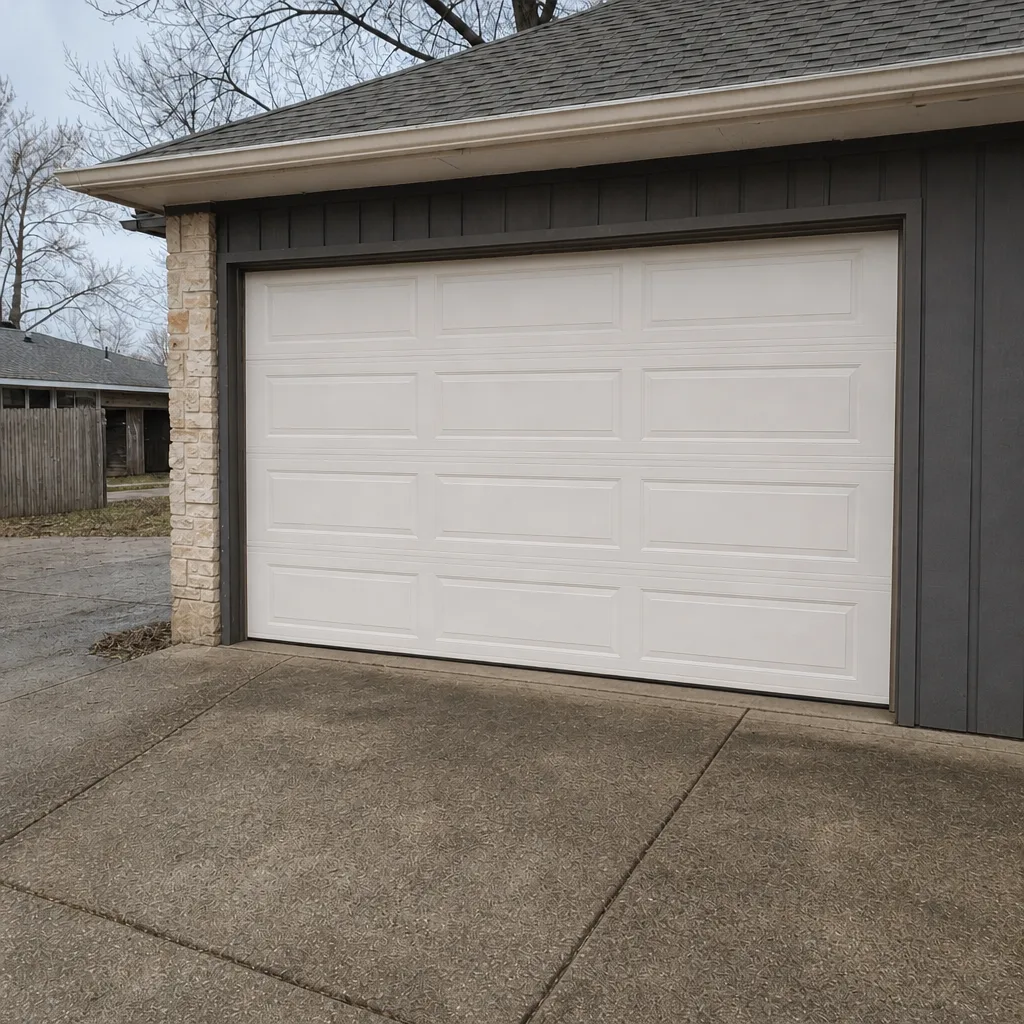 After
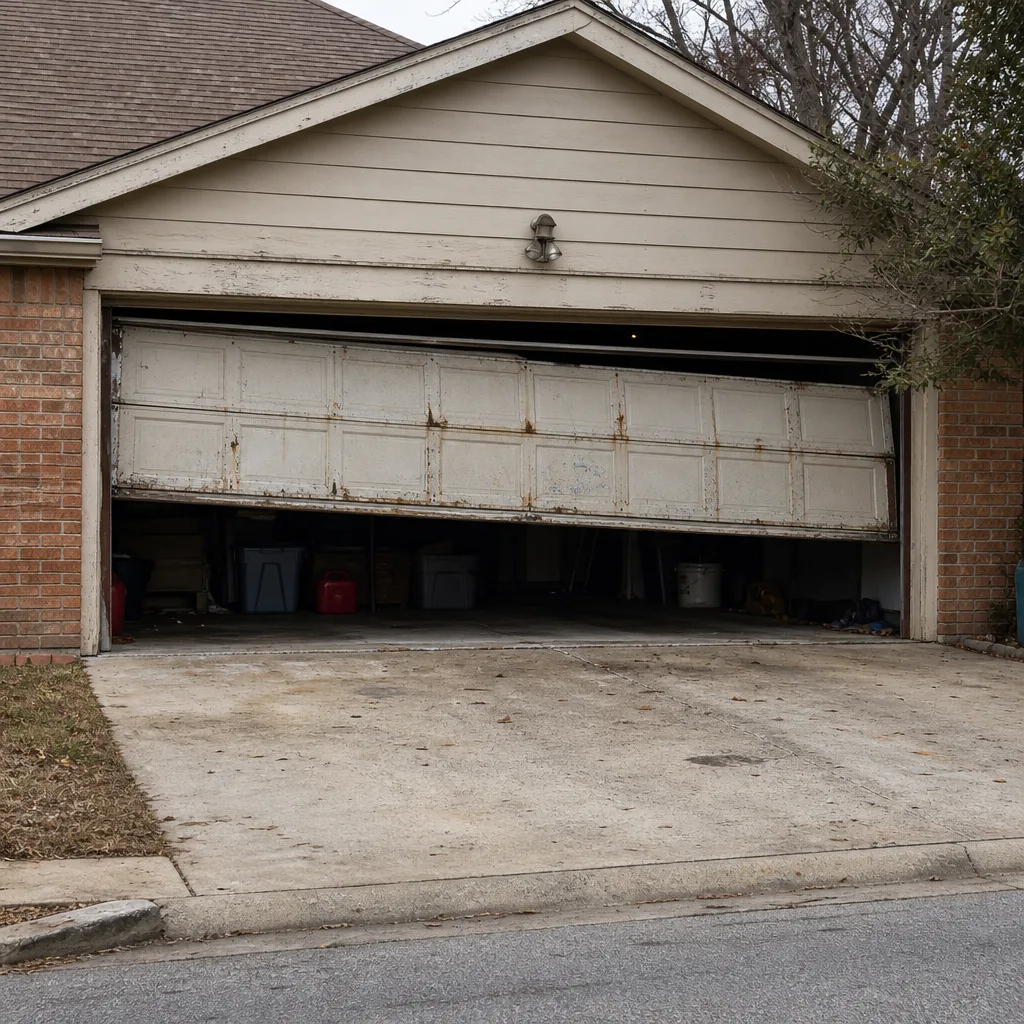 Before
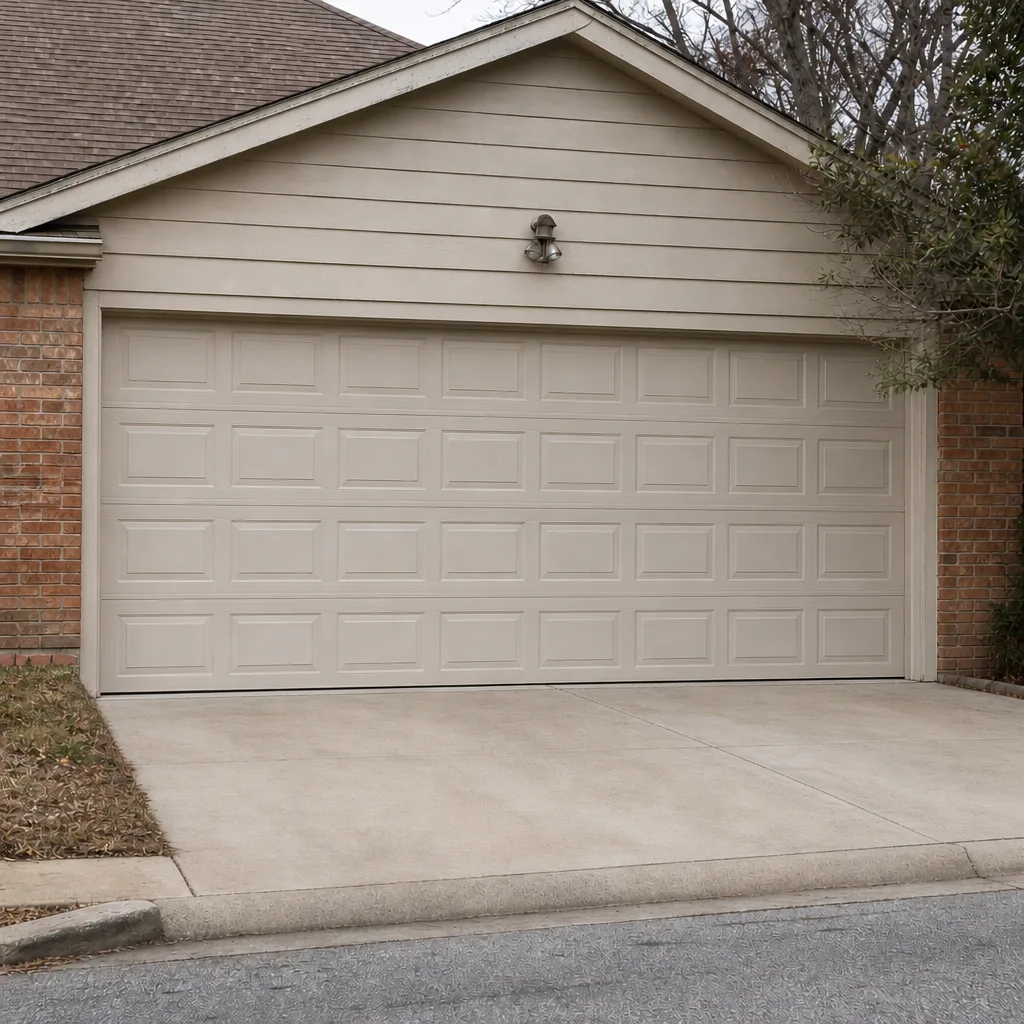 After
Common Mistakes to Avoid
- Assuming every problem is the opener. About the only thing homeowners reliably guess wrong is blaming the motor first. Run the manual release test before you replace anything, because a strained opener is usually a symptom of a heavy door.
- Running the opener against a door that won’t lift. If the door fails the hand test, every cycle strains the motor and can snap a weakened cable. Stop cycling it and get it looked at.
- Trying to adjust or replace a torsion spring. This is the mistake that causes real injuries. Springs are under extreme tension and are not a homeowner repair, no matter how many videos show it.
- Bending a track back with force. A track that’s been forced back into shape often runs a roller off the rail. Straightening a badly bent track is a replacement job, not a bending job.
- Ignoring a blinking sensor light. A door that reverses on its own is usually a dirty or misaligned photo-eye. Wipe the lenses and check alignment before you assume the opener’s gone bad.
- Misreading error codes across brands. The same blink pattern means different things on a LiftMaster, a Genie, and a Craftsman. Without the manual for your exact model, don’t buy a part based on a blink count.
- Skipping seasonal lubrication. Oklahoma’s temperature swings dry out rollers and hinges. A few minutes of lubrication as the seasons change prevents a lot of noise and wear.
When to Call a Professional
Some problems are a technician’s job from the start. Call a professional if the door fails the hand-lift test, if you see a gap in a torsion spring or a frayed cable, if the door hangs crooked, or if the opener runs but the door doesn’t move. Those point to springs, cables, or the opener drive, and none of them should be handled by a homeowner. Same goes for a door that’s come off its track or a track that’s badly bent. Sensor alignment, limit adjustment, and lubrication are the safe DIY territory – everything on the torsion bar is not. In Broken Arrow, we offer free estimates and can tell you which category your problem falls into. Call (844) 320-3275 and we’ll get you sorted. We answer 24/7. Fast dispatch from 7am to 7pm, Sunday through Friday.
Frequently Asked Questions
A door that reverses before reaching the floor is almost always a safety sensor problem – dirty, misaligned, or blocked photo-eyes. Wipe the lenses, check that nothing is in the door’s path, and confirm both sensor lights are steady. If they’re aligned and the door still reverses, the travel limits may need adjusting. Call (844) 320-3275 for an exact quote if the adjustment doesn’t hold – estimates are free.
No. Torsion springs are under extreme tension and releasing one without the right tools and training can cause serious injury. This is a job for a trained technician, and we recommend against any DIY attempt on the springs or cables. Call (844) 320-3275 to have it handled safely.
Repair cost depends on the part and the system, and the written estimate sets the final price. You get an estimate before any work starts, so there’s no surprise on the invoice. Call (844) 320-3275 for a free estimate – the price is agreed before we begin.
A humming opener that won’t move the door usually has a stripped drive gear, a broken belt or chain, or a door too heavy for the opener to lift. Pull the manual release and test the door by hand – if it’s heavy, the problem is the springs, not the motor. Call (844) 320-3275 for a diagnosis and a free estimate.
Yes. Metal expands in heat and contracts in cold, so springs and tracks behave differently across the seasons. A door that only struggles in extreme heat or cold is usually showing that the mechanical side is marginal. If it’s suddenly heavy, the springs need a look. Call (844) 320-3275 and we’ll check it.
Yes. We work on LiftMaster, Chamberlain, Genie, Craftsman, Raynor, and the door systems from Clopay, Amarr, and Wayne Dalton. Brand familiarity means we diagnose by the actual system you own, so you don’t get a one-size-fits-all guess. Call (844) 320-3275 for a free estimate.
The Bottom Line
Most garage door trouble sorts into four categories: springs and cables, the opener, tracks and rollers, or sensors and limits. The manual release test – pulling the cord and lifting the door by hand – tells you which half of that list you’re dealing with before you call anyone. Sensors, limits, and lubrication are safe for you to handle. Springs, cables, and anything on the torsion bar are not. In Broken Arrow, the seasonal temperature swings can make a marginal door act up, so a door that’s suddenly heavy is worth checking early. Sort the symptom first, then decide whether it’s a DIY fix or a call.
Morningstar Garage Door Repair provides free estimates in Broken Arrow for repair, opener service, and installation. Call (844) 320-3275 to get started. We answer 24/7. Fast dispatch from 7am to 7pm, Sunday through Friday, and we’re closed Saturday.
Written by the team at Morningstar Garage Door Repair.